Have you recently lost a tooth and wondered what to do next?
Many patients searching for missing tooth replacement options are surprised to learn that leaving a missing tooth untreated can affect much more than appearance. A missing tooth can impact chewing, speech, jawbone health, and even the alignment of surrounding teeth.
One of the most common questions patients ask is:
“Should I choose a dental implant or a dental bridge?”
Understanding the differences between dental implants vs bridges can help you make an informed decision about your long term oral health and confidence.
Losing a tooth can be an unexpected and stressful experience. Whether it happens because of an accident, severe decay, gum disease, or aging, many patients immediately begin searching for answers. One of the first questions people ask is,
“What is the best option for replacing a missing tooth?”
Today, modern dentistry offers several effective tooth replacement options, but two treatments consistently stand out: dental implants and dental bridges. Both can restore your smile, improve function, and help you regain confidence. However, they work differently and offer unique advantages depending on your oral health needs.
If you have recently experienced tooth loss and are researching dental implants vs bridges, understanding the differences between these treatments can help you make a more informed decision for your long term oral health.
Missing a Tooth Now What?
Many patients assume that losing a single tooth is mainly a cosmetic issue. In reality, tooth loss affects much more than appearance.
When a tooth is missing, surrounding teeth no longer have the support they once did. Over time, neighboring teeth may begin shifting into the empty space, affecting your bite and alignment. The jawbone beneath the missing tooth can also begin to shrink because it no longer receives stimulation from the tooth root.
If you are wondering how to replace a missing tooth, the most important step is scheduling an evaluation as soon as possible. Early treatment can help prevent additional complications and preserve more treatment options.
Potential consequences of delaying treatment include:
- Teeth shifting out of alignment
- Increased difficulty chewing
- Changes in speech patterns
- Jawbone deterioration
- Uneven bite pressure
- Reduced smile confidence
What Happens When You Lose a Tooth?
Many people are surprised to learn that tooth loss can affect their overall oral health. The hidden dangers of missing teeth often develop gradually, making them easy to overlook at first.
After a tooth is lost, the jawbone in that area may begin to shrink. This process, known as bone resorption, occurs because the bone no longer receives stimulation from chewing forces.
Over time, patients may experience:
- Facial structure changes
- Premature aging around the mouth
- Increased pressure on remaining teeth
- Difficulty eating certain foods
- Greater risk of additional dental problems
This is why dentists often recommend exploring tooth replacement options sooner rather than later.
Understanding Your Tooth Replacement Options
When replacing a missing tooth, patients typically consider two primary solutions:
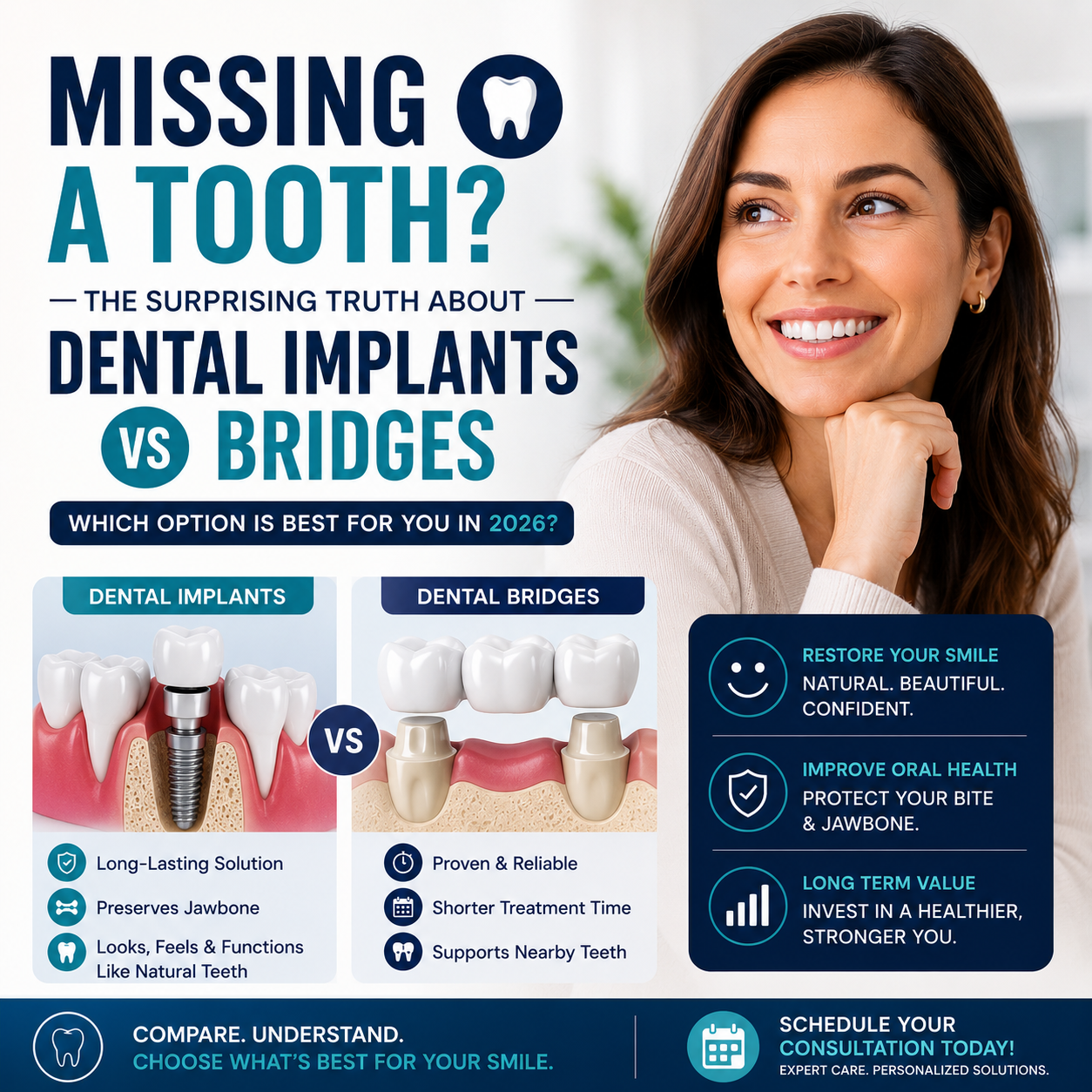
Dental Implants
Dental implants replace both the visible tooth and the tooth root beneath the gums. A titanium implant is placed into the jawbone and serves as a stable foundation for a custom restoration.
Dental Bridges
A dental bridge fills the gap created by a missing tooth by using neighboring teeth as support. The bridge contains an artificial tooth that restores appearance and function.
Both treatments can effectively restore your smile, but understanding how they differ is essential when choosing the best option for missing teeth.
Dental Implants vs Bridges What Is the Difference?
The debate between dental implants vs bridges is one of the most common discussions in restorative dentistry.
While both treatments restore missing teeth, they differ significantly in terms of structure, longevity, maintenance, and impact on surrounding teeth.
| Feature | Dental Implants | Dental Bridges |
|---|---|---|
| Replaces Tooth Root | Yes | No |
| Helps Preserve Jawbone | Yes | Limited |
| Impact on Neighboring Teeth | Minimal | May require modification |
| Long Term Durability | Often decades with proper care | May require replacement sooner |
| Appearance | Highly natural | Natural looking |
| Cleaning Routine | Similar to natural teeth | Requires specialized cleaning |
For many patients, this comparison helps clarify whether an implant or bridge better suits their goals and oral health condition.
Pros and Cons of Dental Implants and Bridges
Every treatment has benefits and limitations. Understanding the pros and cons of dental implants vs bridges can help patients make informed decisions.
Dental Implants: Pros and Cons
Pros | Cons |
|---|---|
• Help preserve jawbone health • Mimic natural tooth function • Long lasting solution • Highly aesthetic appearance • Do not rely on neighboring teeth for support | • Require a surgical procedure • Longer treatment timeline • Not every patient is an immediate candidate |
Dental Bridges: Pros and Cons
Pros | Cons |
|---|---|
• Typically completed more quickly • Effective for restoring function • Suitable for certain patients who may not qualify for implants • Less invasive treatment process | • May require modification of healthy adjacent teeth • Do not stimulate the jawbone beneath the missing tooth • May need replacement over time |
Which Option Looks More Natural?
Many patients seeking a missing front tooth solution are particularly concerned about appearance.
Both dental implants and bridges can provide attractive, natural looking results when designed properly. However, implants often provide additional benefits because they emerge directly from the gum tissue, closely mimicking a natural tooth.
Modern restorative dentistry allows dentists to carefully match:
- Tooth color
- Shape
- Size
- Alignment
- Gum aesthetics
For patients interested in achieving a natural looking tooth replacement, both options can be highly successful when properly planned.
How Dental Implants Can Improve Smile Confidence
Tooth loss affects more than physical appearance. Many patients experience a decrease in confidence after losing a tooth.
People often report feeling self conscious when:
- Smiling in photos
- Speaking professionally
- Meeting new people
- Attending social events
- Eating in public
Dental implants can help restore confidence by providing a secure and natural feeling replacement. Many patients describe feeling more comfortable smiling, speaking, and enjoying daily activities after treatment.
For individuals seeking the best smile restoration treatment, confidence is often one of the most valuable outcomes.
Bridge vs Implant Cost Considerations
When comparing tooth replacement options, cost naturally becomes an important factor.
The investment required for either treatment depends on several factors including:
- Number of missing teeth
- Bone condition
- Type of restoration
- Additional procedures required
- Treatment complexity
Although bridges may sometimes involve a lower initial investment, many patients also consider long term durability, maintenance needs, and overall value when making a decision.
The goal is not simply choosing the least expensive option, but selecting the treatment that provides the best long term outcome.
Who Is a Good Candidate for Dental Implants?
Many adults with missing teeth may qualify for dental implant treatment.
Ideal candidates often have:
- Healthy gums
- Good overall oral health
- Adequate jawbone support
- Commitment to maintaining oral hygiene
- Realistic treatment expectations
A comprehensive dental implant consultation helps determine whether implants are the right solution for your individual situation.
When a Dental Bridge May Be the Better Choice
Although dental implants offer many benefits, they are not always the best choice for every patient.
A dental bridge may be recommended when:
- Adjacent teeth already require crowns
- Certain medical conditions affect healing
- Patients prefer a shorter treatment timeline
- Individual circumstances make implants less practical
This is why personalized treatment planning remains essential. The right solution varies from patient to patient.
Choosing a Tooth Replacement Specialist in NYC
Choosing a provider for restorative dental treatment involves more than simply finding the nearest office.
Patients should look for a dental team that offers:
- Comprehensive evaluations
- Modern digital technology
- Personalized treatment planning
- Clear communication
- Experience with restorative procedures
An experienced tooth replacement specialist can explain available options and help determine which treatment best supports your oral health goals.
Ready to Restore Your Smile?
Living with a missing tooth can affect your confidence, oral health, and quality of life. Fortunately, modern restorative dentistry offers effective solutions designed to restore both function and appearance.
At Diamond District Dental NYC, our team provides personalized evaluations to help patients understand their tooth replacement options and choose the treatment that best fits their needs.
Frequently Asked Questions
The best option depends on your oral health, treatment goals, and individual circumstances. Dental implants and dental bridges are both effective solutions for many patients.
While it is possible, untreated tooth loss can lead to shifting teeth, bite changes, jawbone loss, and other long term complications.
Dental implants offer several advantages including jawbone preservation and independent support. However, the ideal treatment varies based on each patient’s needs.
Dental implants are often considered one of the most durable tooth replacement options when maintained properly.
Yes. Modern dental implants are designed to closely resemble natural teeth in appearance, function, and feel.
Leaving a missing tooth untreated may contribute to bone loss, shifting teeth, bite problems, and additional oral health concerns over time.
Dental bridges can provide long lasting results, but they may eventually require maintenance or replacement depending on individual circumstances.
It is generally beneficial to seek professional evaluation as soon as possible after tooth loss to preserve treatment options and reduce potential complications.
Conclusion
If you are comparing dental implants vs bridges, there is no universal answer that works for everyone. Both treatments offer valuable benefits and can successfully restore missing teeth.
The best choice depends on factors such as oral health, bone support, treatment goals, budget, and long term expectations. Understanding the advantages and limitations of each option is the first step toward making a confident decision.
If you are dealing with tooth loss and exploring your options, a professional consultation can provide personalized guidance and help you determine the most appropriate path forward for your smile and overall oral health.