A toothache can start as a dull ache, a sharp pain when you bite down, or a sensitivity that lingers long after you finish your coffee. Sometimes it settles on its own. Other times, it is your mouth’s way of warning that something deeper is going on inside the tooth.
Understanding the causes of root canal treatment is important because not every toothache means you need one, but certain symptoms can point to infection or inflammation inside the tooth pulp. In those cases, endodontic treatment may be the best way to save the tooth and relieve pain.
For patients in NYC, where schedules are tight and dental pain can be easy to ignore until it gets worse, knowing the difference between temporary irritation and a true dental emergency can help you act sooner and avoid more extensive treatment later.
What a Root Canal Actually Treats?
A root canal is not the cause of the problem. It is the treatment used when the soft inner tissue of the tooth, called the pulp, becomes inflamed or infected.
The pulp contains nerves, blood vessels, and connective tissue. Once bacteria reach this area, usually through decay, cracks, or trauma, the tooth may become painful and sensitive. A root canal removes the damaged tissue, disinfects the inside of the tooth, and helps preserve the natural tooth structure.
That distinction matters. Many people say they “need a root canal” as if the procedure itself is the problem, but the real issue is the underlying damage or infection.
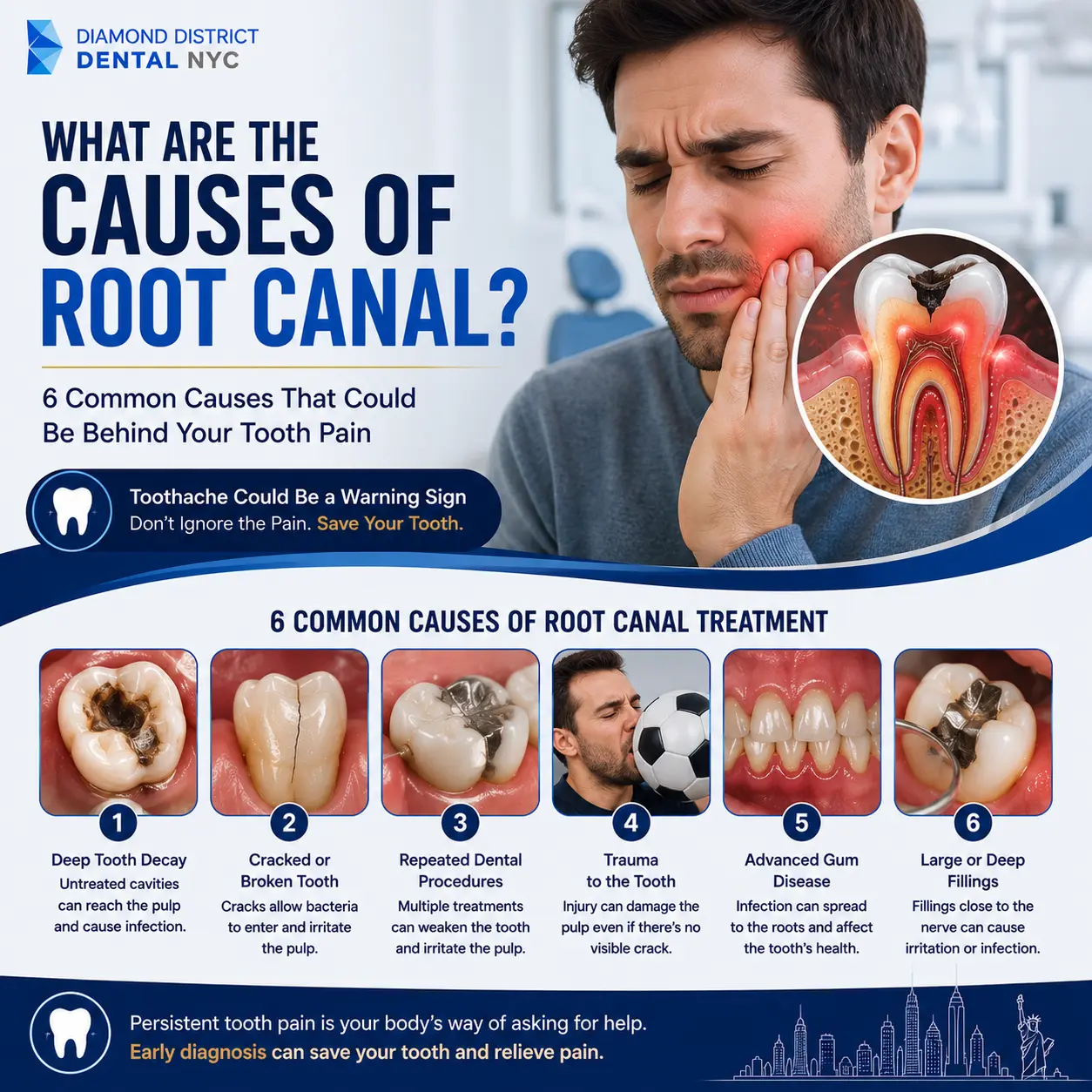
There are several common reasons a tooth may eventually need endodontic treatment. Some develop slowly, while others happen after sudden injury.
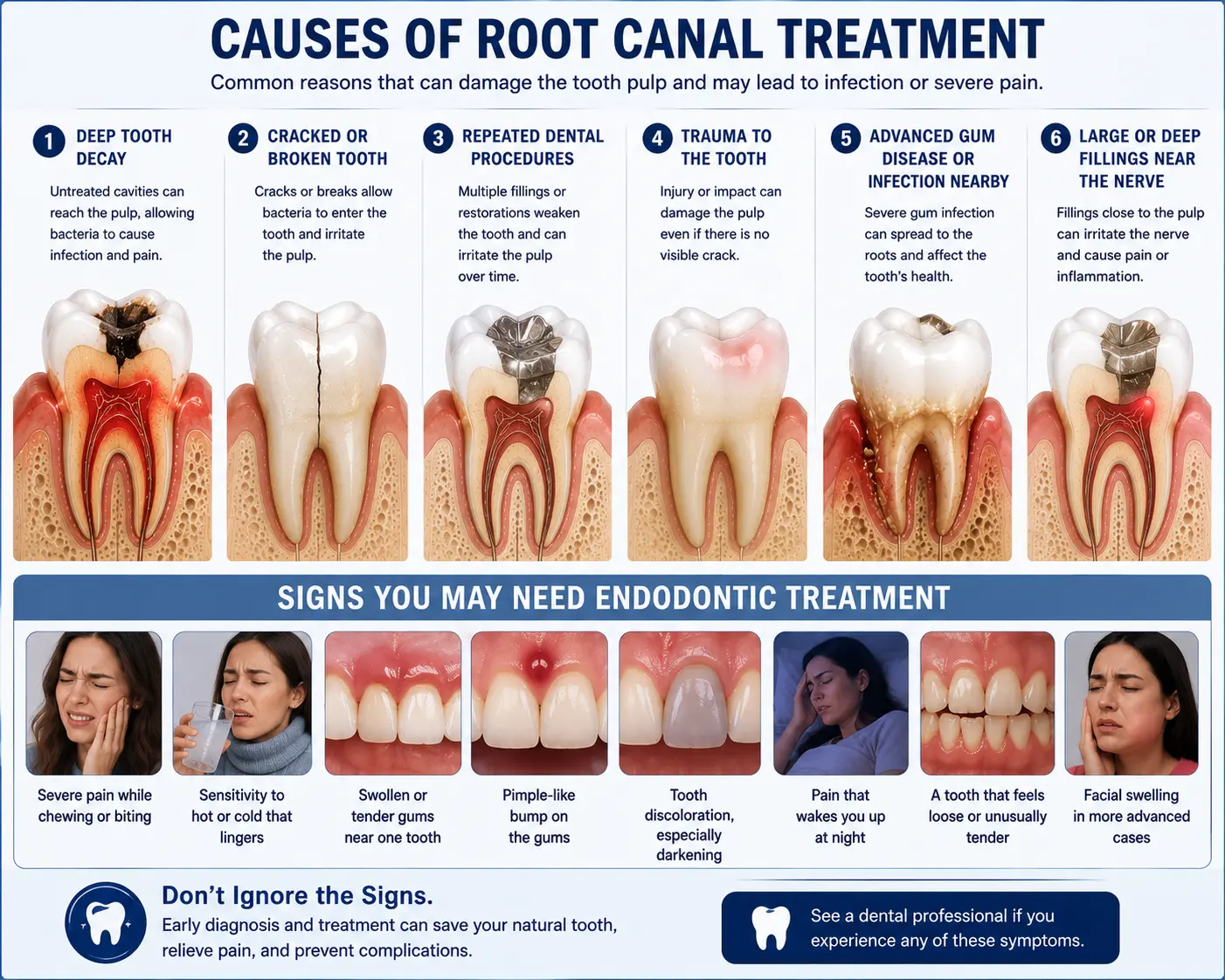
This is one of the most common causes of root canal treatment. A cavity that is left untreated can extend beyond the enamel and dentin, eventually reaching the pulp chamber. Once bacteria enter the inner tooth, inflammation can become severe.
At first, you may notice cold sensitivity or mild pain when chewing. As decay progresses, pain may become constant, throbbing, or more noticeable at night.
A tooth does not need a large visible break to be at risk. Small cracks can allow bacteria to move inside the tooth and irritate the pulp. Grinding, biting hard foods, or past dental work can increase the chance of a crack.
Some patients describe this as pain that comes and goes. Others only feel discomfort when biting down.
A tooth that has had several fillings or restorations may become more vulnerable over time. Each procedure affects the tooth structure a little more, and eventually the pulp can become irritated or inflamed.
This does not mean dental work is harmful. It simply means heavily restored teeth sometimes need closer monitoring.
A blow to the mouth, sports injury, fall, or accident can damage the pulp even if the tooth does not visibly chip. Sometimes the tooth darkens weeks or months later, which can signal internal injury.
Trauma related pulp damage is especially important because pain may appear late, after the initial injury seems to have healed.
While gum disease does not directly infect the pulp in most cases, severe periodontal infection can contribute to oral bacterial load and complicate the health of nearby teeth. In certain situations, infection can spread in ways that affect the tooth roots or surrounding structures.
If a filling is very close to the pulp, the tooth may become irritated afterward. Sometimes this settles. Other times, the tooth remains sensitive or painful and requires root canal evaluation.
Signs You May Need Endodontic Treatment
A toothache does not automatically mean root canal treatment is needed. Still, certain symptoms deserve prompt evaluation.
Common warning signs include:
- Severe pain while chewing or biting
- Sensitivity to hot or cold that lingers
- Swollen or tender gums near one tooth
- A pimple like bump on the gums
- Tooth discoloration, especially darkening
- Pain that wakes you up at night
- A tooth that feels loose or unusually tender
- Facial swelling in more advanced cases
Not every patient has all of these symptoms. In fact, some infected teeth cause very little pain at first. That is one reason dental exams matter even when discomfort seems minor.
Tooth Ache or Root Canal Problem? How to Tell the Difference
A tooth ache can come from several sources, including a cavity, gum irritation, sinus pressure, teeth grinding, or a cracked filling. Root canal related pain tends to have a few patterns that raise concern.
Here is a simple comparison:
Common Toothache Causes
Possible Cause | Typical Symptoms | What It May Mean |
|---|---|---|
Mild cavity | Short sensitivity to sweets or cold | Early decay, may need filling |
Gum irritation | Tender gums, bleeding with brushing | Gingivitis or periodontal inflammation |
Cracked tooth | Sharp pain when biting | Structural damage, may need evaluation |
Pulp infection | Lingering pain, hot or cold sensitivity, swelling | May need root canal treatment |
Sinus pressure | Upper tooth discomfort, congestion | Pain may not originate in the tooth |
What Happens During a Root Canal Evaluation?
A professional evaluation is the only way to know whether a tooth can be saved with root canal treatment or if another approach is better.
At Diamond District Dental NYC, evaluation typically includes:
- Review of your symptoms and dental history
- Visual exam of the tooth and gums
- Percussion and bite testing
- X rays to look for decay, infection, or root changes
- Cold or heat testing in some cases
These tests help determine whether the pulp is inflamed, partially damaged, or no longer viable. They also help rule out issues like cracks or pain referred from other areas.
Who Is a Good Candidate for Root Canal Treatment?
A good candidate is usually someone with a tooth that has infection or irreversible pulp inflammation but still has enough healthy structure to restore.
Root canal treatment is often appropriate when:
- The tooth can still be saved
- Infection has not destroyed too much surrounding bone
- The tooth can be restored with a filling or crown afterward
- The patient wants to avoid extraction if possible
In some cases, extraction may be the better choice, especially if the tooth is too damaged, fractured below the gumline, or cannot be restored reliably.
What to Expect from Treatment?
Many patients are surprised that modern root canal treatment is typically designed to relieve pain, not cause it. Local anesthesia is used, and most procedures are completed in one or two visits depending on the tooth and the extent of infection.
A general treatment timeline may look like this:
Root Canal Timeline
Stage | What Happens | Typical Goal |
|---|---|---|
Diagnosis | Exam, imaging, symptom review | Confirm the source of pain |
Treatment visit | Remove infected pulp, clean canals, seal tooth | Eliminate infection |
Temporary or final restoration | Fill or crown placement | Protect tooth structure |
Follow up | Monitor healing | Ensure symptoms improve |
Benefits and Limitations of Root Canal Treatment
Root canal treatment can preserve a natural tooth and often eliminates infection related pain. That can help maintain chewing function, prevent shifting teeth, and avoid extraction when the tooth is still restorable.
But it is not a guarantee against future dental problems.
Benefits
- Saves the natural tooth in many cases
- Relieves infection related pain
- Helps maintain bite alignment
- Often avoids the need for extraction and replacement
Limitations
- Severely damaged teeth may not be salvageable
- A crown or additional restoration may still be necessary
- Retreatment or extraction may be needed if infection returns or the tooth fractures later
That is why long term follow up and a final restoration are so important.
If You Wait Too Long, What Can Happen?
Delaying care can allow infection to spread. A small cavity or crack may turn into a more serious problem involving the root, jawbone, or surrounding tissues.
Possible consequences of waiting include:
- Increased pain
- More swelling
- Larger infection
- Need for emergency treatment
- Greater chance of tooth loss
In some cases, infection can become a true dental emergency. Facial swelling, fever, trouble swallowing, or difficulty breathing require immediate medical attention.
Why NYC Patients Often Delay Care?
Busy work schedules, commuting, and packed calendars make it easy to postpone a dental visit, especially if the pain comes and goes. In New York City, many patients try to manage symptoms until the problem becomes impossible to ignore.
That approach can make treatment more complex. A tooth that could have been treated conservatively may need more extensive care later. Prompt evaluation is usually the safer and more predictable option.
How to Lower Your Risk of Needing a Root Canal?
Not every root canal can be prevented, especially when trauma or old restorations are involved. Still, good daily habits reduce risk.
Helpful steps include:
- Brush twice a day with fluoride toothpaste
- Floss daily
- Address cavities early
- Wear a mouthguard if you grind your teeth
- Use a sports mouthguard for contact activities
- Keep regular dental checkups and cleanings
- Do not ignore lingering sensitivity or tooth pain
Preventive care is often the simplest way to avoid bigger problems later.
When to Call a Dentist Right Away?
You should schedule dental care promptly if you have:
- Persistent tooth pain
- Swelling around one tooth or in the face
- Sensitivity that lasts after hot or cold exposure
- A chipped or cracked tooth with pain
- A darkened tooth after trauma
- A gum bump near a painful tooth
If the pain is severe or you have swelling, emergency dental care may be necessary.
Conclusion
Understanding the causes of root canal treatment can help you make sense of a toothache before it becomes a bigger problem. Deep decay, cracks, trauma, and repeated dental work can all damage the pulp and lead to infection or inflammation inside the tooth.
Not every ache means endodontic treatment is needed, but lingering pain, swelling, and sensitivity that does not go away should always be checked by a dentist. The earlier the problem is diagnosed, the more options you usually have for saving the tooth and protecting your oral health.
For patients in New York City, prompt care can make a real difference, especially when symptoms are starting to interfere with work, sleep, or daily life.
The most common causes of root canal treatment include deep tooth decay, cracked or broken teeth, repeated dental procedures, and dental trauma that damages the tooth’s pulp. These conditions allow bacteria to reach the inner tooth, leading to infection or inflammation. Early diagnosis and treatment can often save the natural tooth and prevent more serious complications.
No. A toothache can result from cavities, gum disease, a cracked tooth, teeth grinding, or even sinus pressure, and not every case requires a root canal. If your tooth pain is severe, lingers after hot or cold exposure, or is accompanied by swelling, a dental examination is the best way to determine the underlying cause and appropriate treatment.
A root canal can save many infected teeth, but not every tooth is suitable for treatment. If the tooth is severely fractured, has extensive decay below the gumline, or cannot be restored with a filling or crown, extraction may be the healthier long term option. Your dentist will evaluate which treatment offers the best outcome.
Modern root canal treatment is designed to relieve pain caused by an infected tooth rather than create it. With local anesthesia and advanced dental techniques, most patients experience little discomfort during the procedure and often feel significant pain relief once the infection has been treated.
A serious tooth infection may cause persistent or severe tooth pain, swelling of the gums or face, a pimple-like bump on the gums, fever, or difficulty swallowing. These symptoms should never be ignored, as untreated dental infections can spread and require emergency dental care. Seeking prompt treatment helps protect both your oral and overall health.
Many teeth, especially back molars and premolars, benefit from a dental crown after root canal treatment because the tooth becomes more vulnerable to fractures. A custom crown restores strength, improves function, and helps protect the treated tooth for many years with proper care.
Yes. In some cases, pain may disappear because the nerve inside the tooth has died, but the infection can still remain and continue spreading silently. Even if your tooth no longer hurts, you should schedule a dental evaluation if you previously experienced severe pain, swelling,
or prolonged sensitivity.
You should schedule a dental appointment as soon as possible if tooth pain lasts more than a day or two, becomes more severe, or is accompanied by swelling, lingering sensitivity, or difficulty chewing. Early diagnosis can often prevent infection from worsening and may increase the chances of saving your natural tooth.
If you are dealing with tooth pain or think you may need a root canal evaluation, schedule a consultation with Diamond District Dental NYC. Our team can assess the cause of your discomfort, explain your options clearly, and recommend the most appropriate treatment for your situation.