
SMILE & ALIGNMENT · MIDTOWN MANHATTAN
Crooked or Crowded Teeth in NYC? Why Teeth Overlap or Shift
Crooked and crowded teeth describe tooth position, not the treatment. Teeth can overlap, rotate, erupt outside the normal row, or gradually shift for several reasons. The right next step depends on available space, the bite, periodontal health and what you want to improve.
One tooth is rotated
Localized tooth position can be different from generalized dental crowding
Teeth shifted after braces
Relapse and lifetime tooth-position changes can occur even after earlier alignment.
Book Appointment
Get Your Consultation
Same-day replies. No obligation. A real dentist reviews every request.
20-SECOND EXPLANATION
Crooked Teeth, Crowding and Malocclusion Are Related but Different
Patients often use these terms interchangeably. Clinically, they describe different parts of the alignment picture.
01
Crooked teeth describe individual tooth position
A tooth may be rotated, tilted, displaced or sitting unevenly even when overall arch space is not severely limited.
02
Crowding describes a space problem
When the available dental arch space does not match the position and size of the teeth, overlapping or displacement can result.
03
Malocclusion describes how the upper and lower teeth meet
Overbite, overjet, crossbite, open bite and underbite are broader bite relationships, not simply another word for crowding.
WHAT ARE YOU NOTICING?
Common Patterns of Crooked or Crowded Teeth
Appearance alone does not determine treatment complexity, but the pattern helps identify what should be checked next.
Lower front teeth overlap
Adult lower incisors can gradually become more irregular or relapse after previous orthodontic treatment.
One tooth is rotated
A localized rotation can affect appearance and create tight cleaning contacts without representing a severe bite problem.
A tooth sits behind or outside the row
A displaced eruption path or limited space may leave one tooth blocked out of the usual arch position.
Floss is hard to pass
Overlapping contacts can make cleaning more difficult, but rough fillings or restoration margins can also shred floss.
Teeth are shifting as an adult
Lifetime positional changes, orthodontic relapse, missing teeth or changes in periodontal support may contribute.
Crowding plus recession or wear
A malpositioned tooth may need periodontal and structural evaluation before alignment options are discussed.
HOW CROWDING DEVELOPS
Why Do Teeth Become Crooked or Crowded?
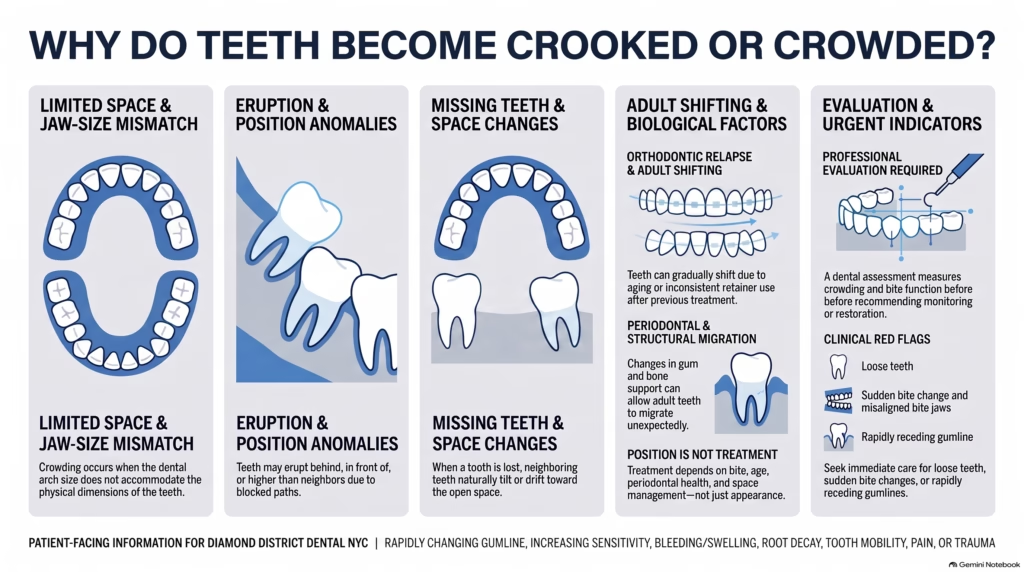
Several pathways can create a similar-looking alignment problem. The cause cannot be diagnosed from a smile photo alone.
Periodontal / structural change
Changes in tooth support can sometimes allow adult teeth to migrate or fan out.
Eruption / tooth position
One tooth may erupt behind, in front of or outside the normal row.
Missing-tooth space changes
Neighboring teeth can drift or tilt when an open space is left untreated.
Orthodontic relapse / adult shifting
Previously straight teeth can move after treatment or gradually change over adulthood.
Limited space / tooth-size relationship
Teeth may overlap or rotate when available arch space is insufficient for their positions.
Why the distinction matters
The Position Tells You What You See, Not Automatically Why It Happened
A clinician also considers orthodontic history, retained or missing teeth, periodontal support, eruption pattern, available space and how the upper and lower teeth meet.
Crowding is not always genetic
Growth, eruption, missing teeth and previous orthodontics can all affect alignment.
Wisdom teeth are not a simple explanation
Adult front-tooth crowding should not automatically be blamed on third molars.
Not every case needs treatment
Mild stable irregularity may be monitored when function and hygiene remain healthy.
WHY ALIGNMENT CAN CHANGE
Common Reasons Teeth Become Crowded, Rotated or Shifted
Most alignment patterns are multifactorial rather than the result of one single cause.
The basic process
Adult tooth position reflects how the teeth developed and what changed afterward.
How much space is available?
Arch dimensions and tooth positions influence whether teeth fit without overlap.
How did the teeth erupt?
Blocked, retained or displaced teeth can create local irregularity.
Has the support or space changed?
Tooth loss, orthodontic relapse and periodontal changes can move adult teeth.
Tooth size/arch space relationship
Some dental arches simply have less room relative to the size and position of the teeth, which can lead to overlap or rotation.
Eruption pathway
A permanent tooth can emerge in a displaced position when its path is blocked or available space is limited.
Early tooth loss / missing teeth
Neighboring teeth may drift or tilt when a space is left open, changing alignment over time.
Orthodontic relapse
Teeth can shift after braces or aligners, which is why long-term retention is part of orthodontic care.
Lifetime positional change
Small changes in tooth position can continue through adulthood even in people who never had wisdom-tooth problems.
Periodontal support changes
Loss of periodontal support can allow teeth to drift, flare or develop new spaces and should be evaluated before orthodontic treatment.
Developmental oral habits
Prolonged childhood habits such as thumb or pacifier sucking can influence developing tooth and bite relationships in some children.
Trauma / retained primary teeth
Developmental injury or a primary tooth that remains in place can alter how a permanent tooth erupts.
ORAL HEALTH CONNECTIONS
Can Crowding Affect Cleaning, Gums or Tooth Wear?
It can make some areas harder to maintain but crowding does not automatically cause disease.
Cleaning & Plaque Retention
Overlapping contacts and rotated surfaces can make brushing and interdental cleaning more difficult.
- Plaque can remain longer in tight or irregular contacts.
- Localized gingival inflammation may develop if plaque is not removed effectively.
- Interproximal caries risk can increase when plaque repeatedly remains between crowded teeth.
- Severe crowding can still remain healthy when the area is cleaned effectively and professionally monitored.
Recession & Localized Wear
Tooth position, tissue thickness and contact forces can interact with crowding, but these outcomes are not inevitable.
- A tooth near the edge of its supporting bone may have thinner gum tissue.
- Localized recession can occur around selected malpositioned teeth.
- Uneven contacts may contribute to selected chips or wear patterns.
- Crooked teeth do not automatically cause bruxism or generalized tooth wear.
IMPORTANT TMJ / TMD CLARIFICATION
Do Crooked Teeth Cause TMJ / TMD?
NIDCR states that research does not support the belief that a “bad bite” or orthodontic treatment causes TMD. TMD is a group of jaw-joint and chewing-muscle disorders with multiple possible contributors, and many cases do not have one clear cause.
ALIGNMENT EVALUATION
How Does a Dentist Evaluate Crooked or Crowded Teeth?
The point of the evaluation is not just to ask “how straight can we make the smile?” It is to check whether the teeth, gums and bite are healthy enough for the treatment being considered.
Skeletal bite discrepancies, impacted teeth or periodontal limitations may require collaboration with an orthodontist, periodontist, oral surgeon or another dental specialist depending on the findings.
Review orthodontic and retainer history
Previous braces, aligners, extractions, lost retainers and the timing of adult shifting all help explain the current pattern.
Map alignment, available space and the bite
The dentist evaluates rotations, crowding, spacing and how the upper and lower teeth meet.
Check gums and periodontal support
Recession, bleeding, mobility and bone support matter before orthodontic movement is planned.
Check cavities, wear and restorations
Tight contacts can hide decay, while old restorations or worn edges may affect the treatment sequence.
Use records or imaging when clinically appropriate
Photographs, digital models/scans and dental X-rays may be used when needed to understand tooth and root position. This page does not assume which technology is used for every DDD patient.
TREATMENT DEPENDS ON THE GOAL
What Can Be Done About Crooked or Crowded Teeth?
Some patients want easier cleaning or better function; others mainly want a straighter smile. The safest plan depends on tooth position, periodontal health, bite and the type of movement required.
ORTHODONTIC MOVEMENT
Clear Aligners
Removable clear aligners can move teeth gradually in appropriately selected cases. Suitability depends on the movements required, oral health and the patient's ability to wear the trays as prescribed.
FIXED ORTHODONTICS
Traditional Braces
Fixed brackets and wires can provide continuous orthodontic control and may be favored for some movements, compliance situations or more complex treatment plans.
SPACE CREATION
Space Management
Depending on anatomy, orthodontic planning may involve expansion, limited enamel reduction, extraction or management of missing-tooth spaces. No single approach is right for every crowded arch.
COSMETIC CAMOUFLAGE
Bonding or Veneers
Cosmetic restorations can change the visible shape of selected teeth, but they do not move the roots or correct a true crowding problem.
ORTHODONTICS VS. COSMETIC DENTISTRY
Straightening a Tooth and Making It Look Straighter Are Not the Same Thing
Orthodontics changes the actual tooth and root position. Bonding and veneers alter visible shape and proportions. For significantly rotated or crowded teeth, repositioning first may preserve more natural tooth structure than attempting to mask the alignment entirely with restorative material.
PROTECT CROWDED AREAS AT HOME
What Can You Do Before or Without Orthodontic Treatment?
Home care cannot physically move teeth, but it can help keep crowded areas healthier and protect previous orthodontic results.
Helpful habits
- Brush overlapping and rotated surfaces from more than one angle with fluoride toothpaste.
- Clean between teeth daily with floss or another appropriate interdental aid.
- Ask the dental team whether an interdental brush, floss threader or water flosser would help a specific tight area.
- If you completed orthodontic treatment, use retainers according to your clinician's long-term instructions.
- Keep regular dental visits so tight contacts can be checked for plaque, tartar, recession and decay.
What home care cannot safely do
- It cannot create controlled orthodontic tooth movement.
- Do not wrap rubber bands around teeth to close spaces.
- Do not file, shave or reshape tooth enamel at home.
- Avoid unsupervised tooth-moving systems that bypass an appropriate dental and periodontal assessment.
- It cannot safely reposition an impacted, blocked-out or severely displaced tooth.
WHEN TO GET CHECKED SOONER
When Should Shifting or Crowded Teeth Be Checked Promptly?
Most crowding changes are gradual. Sudden movement, mobility, trauma, swelling or rapidly changing gum support is different.
An adult tooth suddenly becomes loose
Unexpected mobility may reflect trauma, periodontal support loss or another problem beyond ordinary crowding.
Teeth shift rapidly over weeks
Fast positional change deserves evaluation for periodontal or structural causes.
Crowding with progressing gum recession
Periodontal health should be assessed before orthodontic movement is considered.
Pain, swelling or drainage near an unerupted tooth
An impacted or blocked tooth can need a separate diagnostic pathway.
Trauma changes the bite or tooth position
A displaced or mobile tooth after an impact should be assessed promptly.
Use urgent dental or emergency medical care based on the severity instead of waiting for a routine orthodontic consultation.
MEET YOUR DENTIST
Experienced Care Starts with the Right Evaluation
Dr. Oleg Klempner brings more than 30 years of experience caring for patients throughout New York City. At Diamond District Dental NYC, every recommendation starts with a careful evaluation of your dental health, symptoms, and individual needs so you can understand what is happening and what your next step may be.
30+ Years
Serving NYC
NYU
College of Dentistry
Midtown
10 W 46th Street
Health First
Teeth, gums & bite
COMMON QUESTIONS
Questions Patients Ask About Crooked or Crowded Teeth
Tooth position can reflect available arch space, eruption pathways, tooth size/position relationships, early tooth loss, orthodontic relapse, periodontal support and other developmental factors.
Lower-incisor crowding can appear gradually in adulthood or after earlier orthodontic treatment. It should not automatically be blamed on wisdom teeth.
Teeth can continue to change position throughout life. Orthodontic relapse, retainer discontinuation, missing teeth and periodontal support changes are some possible contributors.
Crowding can make plaque removal more difficult in selected areas, which may contribute to localized inflammation if cleaning is inadequate. It does not automatically cause gum disease.
Tight, overlapping contacts can be harder to clean and may increase plaque-retention risk, but crowding itself does not guarantee tooth decay.
Teeth can relapse or continue shifting after active orthodontic treatment. Long-term retention is an important part of maintaining alignment.
Wisdom teeth are not considered a simple, proven sole cause of adult front-tooth crowding. Third-molar decisions should be based on their own clinical findings rather than using crowding alone as the reason for removal.
Adults can often undergo orthodontic treatment when the teeth and periodontal supporting tissues are healthy enough for movement. Age alone does not determine candidacy.
No. Mild stable crowding may be monitored, while selected patients may be treated with clear aligners, braces or other orthodontic approaches depending on the movement required.
Clear aligners can treat many crowding patterns, but candidacy depends on tooth movement complexity, periodontal health, anatomy and treatment goals.
Veneers can change visible tooth shape and make a smile appear more even, but they do not move the roots or correct the underlying tooth position.
It should not be promised. NIDCR states that research does not support the belief that a bad bite or orthodontic treatment causes TMD, and orthodontic treatment is not an evidence-based TMD cure.
RELATED DENTAL CONCERNS
Other Dental Concerns That Can Overlap With Crowded Teeth
Alignment can overlap with gum, hygiene, wear and eruption concerns. These pathways keep the condition page separate from the treatment pages.
Gum Recession
For exposed roots or gumline changes around a malpositioned tooth.
Bleeding Gums
For inflammation around tight or difficult-to-clean crowded contacts.
Gum Disease
For periodontal pocketing, support loss or adult tooth migration.
Cavities / Tooth Decay
For hidden decay concerns in tight overlapping contacts.
Worn / Weak Teeth
For chipped or uneven wear patterns that may overlap with tooth position.
Impacted Teeth
For a permanent tooth that has not erupted normally or appears blocked out.
FIND THE RIGHT ALIGNMENT PATH
Not Sure Whether Your Teeth Need Aligners, Braces or Simply Monitoring?
A crowded smile can look similar from the outside while the bite, gum support and tooth positions are very different. Start with an evaluation so the treatment fits the actual problem.