A brighter smile can make a big difference in how people feel about their appearance, especially in a city like New York where work, social life, and first impressions often overlap. If you have been searching for professional teeth whitening , you have probably also seen a flood of strips, pens, LED kits, and internet hacks promising fast results for less money.
The problem is that whitening is not one size fits all. Some stains respond well to bleaching, while others need a different cosmetic approach. Professional whitening offers a level of evaluation, control, and predictability that most DIY kits simply cannot match. For patients in NYC who want noticeable results without guessing, that matters.
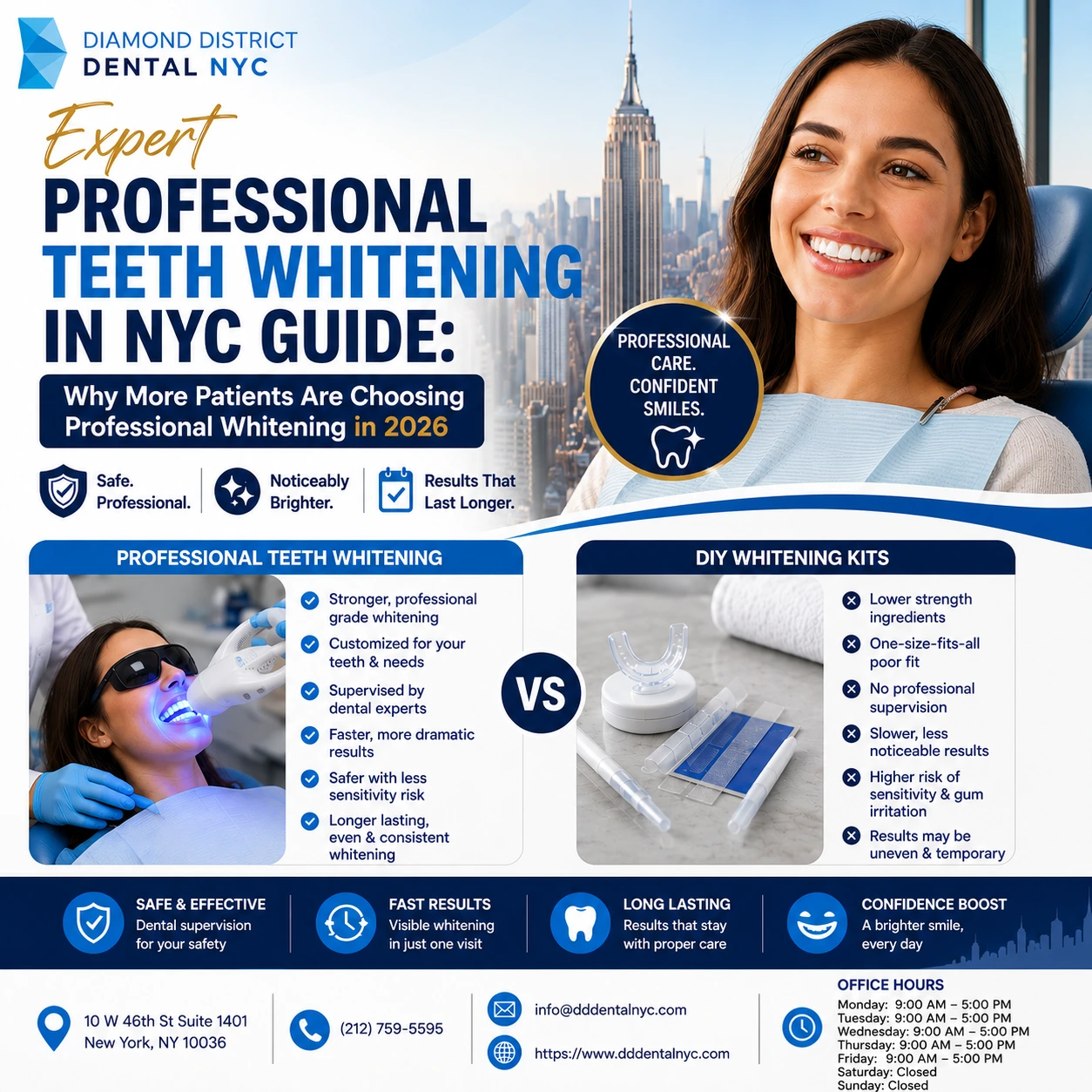
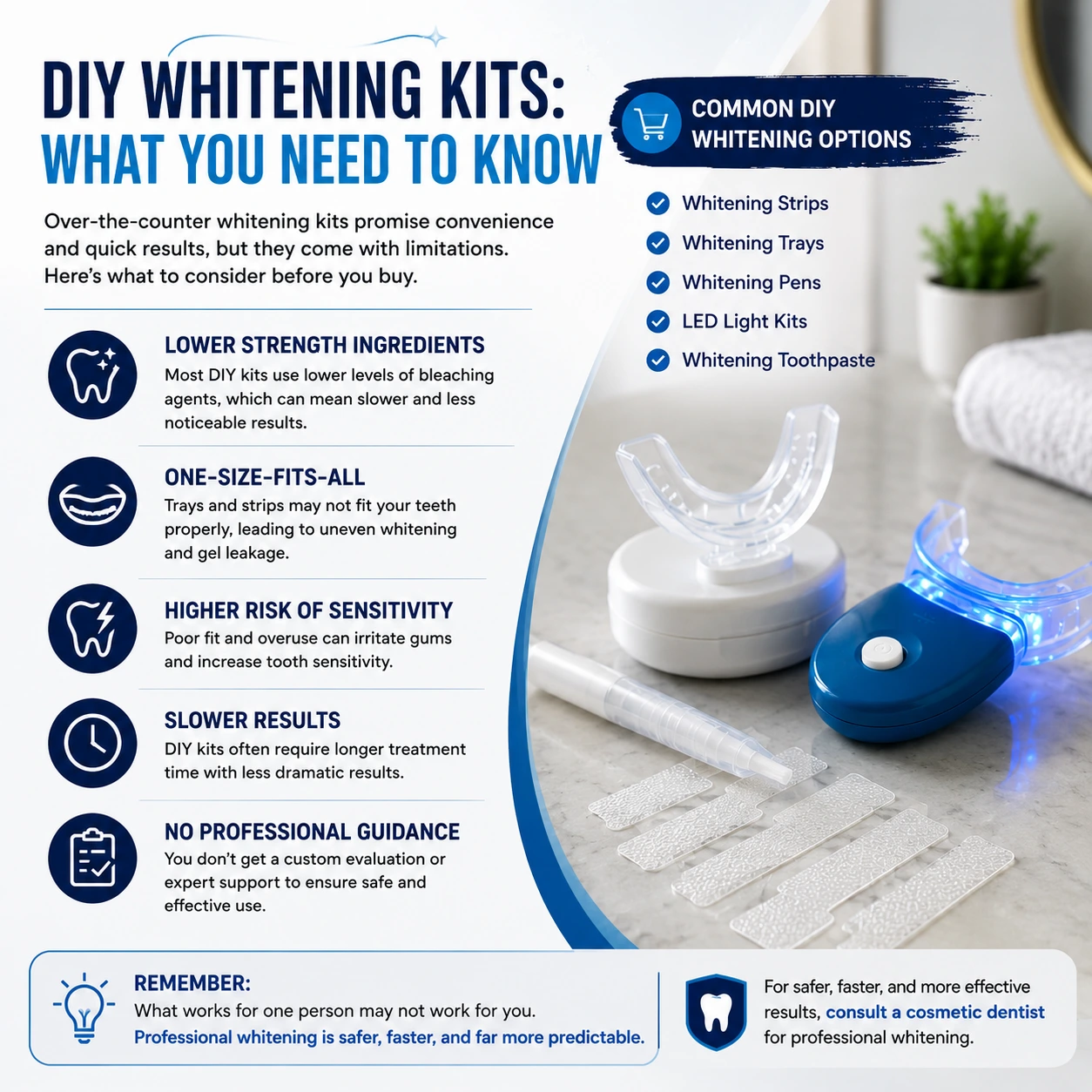
Here is the key difference: professional whitening is supervised by a dentist who can assess the cause of discoloration, choose the right concentration, and protect your gums and enamel during treatment. DIY kits may brighten teeth a little, but they rarely match the consistency or safety oversight of in office care.
Many over the counter products use lower levels of bleaching agents, which may mean slower or less dramatic results. Some kits also have trays or strips that do not fit well, allowing whitening gel to contact the gums and cause irritation. Professional treatment is more customized, which often leads to a more even result.
That does not mean every patient needs the same approach. A dentist may recommend in office whitening, custom take home trays, or a different cosmetic solution if whitening will not address the type of discoloration present.
What causes tooth discoloration in the first place?
Not all stains behave the same way. That is one reason professional evaluation is so important.
Common causes include:
- Coffee, tea, red wine, and dark sauces
- Tobacco use
- Natural aging, which can make enamel thinner and show more of the yellowish dentin underneath
- Certain medications
- Fluorosis or developmental staining
- Old dental work, which may not whiten the same way as natural teeth
If your discoloration is mostly surface staining, whitening may help quite a bit. If the discoloration is intrinsic, meaning it is inside the tooth structure, results can be more limited. In those cases, a dentist may discuss veneers, bonding, or crowns depending on the situation.
What professional whitening can do that store bought kits cannot?
Professional whitening is not only about stronger products. It is also about precision.
A dentist can evaluate whether you are a good candidate, check for cavities or gum inflammation first, and help reduce the chance of sensitivity. In office treatment is typically more controlled, and custom trays can be made to fit your mouth closely if you choose a take home professional system.
Professional care also helps avoid a common issue with DIY kits: whitening only parts of the smile. Uneven application can leave patchy results, especially if a tray does not fit correctly or strips shift during use.
Who is a good candidate for teeth whitening?
Whitening can be a helpful option for many adults, but not everyone is an ideal candidate.
You may be a good candidate if you:
- Have healthy gums
- Do not have untreated cavities or active dental infections
- Want to improve yellow or surface stained teeth
- Understand that whitening will not change the color of fillings, crowns, or veneers
- Are seeking a cosmetic improvement with relatively low downtime
You may need another treatment first if you have:
- Gum disease
- Tooth sensitivity that is already significant
- Decay or broken fillings
- White spots or enamel defects that may become more noticeable after whitening
- Deep intrinsic stains that do not respond well to bleaching alone
A professional exam helps determine what is realistic before you invest time or money in whitening.
In office whitening versus DIY kits
The comparison below shows why patients often choose professional care when they want more predictable results.
Feature | Professional Whitening | DIY Whitening Kits |
|---|---|---|
Supervision | Dentist evaluates and monitors treatment | No direct dental supervision |
Strength of whitening agent | Often stronger and customized | Usually lower strength |
Fit and comfort | Custom or carefully applied | May fit poorly or shift |
Sensitivity management | Dentist can adjust treatment | Limited support if irritation occurs |
Speed of results | Often faster | Usually slower |
Evenness of results | More predictable | Can be uneven |
Suitability screening | Yes | No |
For many patients, the difference comes down to confidence. You are not just hoping a product works. You are getting a plan that accounts for your teeth, your gums, and your goals.
Is professional whitening safe?
How long do whitening results last?
Results vary based on diet, oral hygiene, tobacco exposure, and natural tooth color. Professional whitening is not permanent, but many patients enjoy noticeable improvement for months to years with good maintenance.
Helpful habits include:
- Brushing twice daily with fluoride toothpaste
- Flossing daily
- Rinsing after coffee, tea, or wine when possible
- Limiting tobacco use
- Keeping up with routine dental cleanings
- Using touch up whitening only as recommended by your dentist
Maintenance matters because whitening only changes the color of tooth structure temporarily. Daily habits can either extend or shorten those results.
Results vary based on diet, oral hygiene, tobacco exposure, and natural tooth color. Professional whitening is not permanent, but many patients enjoy noticeable improvement for months to years with good maintenance.
Helpful habits include:
- Brushing twice daily with fluoride toothpaste
- Flossing daily
- Rinsing after coffee, tea, or wine when possible
- Limiting tobacco use
- Keeping up with routine dental cleanings
- Using touch up whitening only as recommended by your dentist
Maintenance matters because whitening only changes the color of tooth structure temporarily. Daily habits can either extend or shorten those results.
Common misconceptions about DIY whitening
Many people assume that if a product is sold over the counter, it must be nearly as effective as professional treatment. That is not always true.
A few myths are especially common:
- If a kit is bright white in the box, it will work the same for everyone.
- More whitening gel means better results.
- Whitening should feel dramatic or painful to be effective.
- All stains can be removed with strips or pens.
- Sensitivity means the product is working better.
In reality, whitening should be tailored and monitored. Pain is not a goal, and more product does not automatically mean better outcomes. Overuse can increase sensitivity and irritation without improving results.
Special considerations for NYC patients
In a city where schedules are busy and first impressions matter, professional whitening often appeals to adults who want efficient, dependable care. Professionals in New York City may prefer a treatment plan that fits around work, events, interviews, or travel.
Patients in NYC also tend to compare cosmetic options carefully. That is smart. A dentist can explain whether whitening alone is likely to create the change you want, or whether it should be part of a broader smile plan that includes Invisalign, bonding, crowns, or other cosmetic services.
Which whitening approach may fit your needs?
Goal | Possible Best Fit | Notes |
|---|---|---|
Mild surface stain removal | Professional whitening or custom trays | Good for coffee, tea, and aging related discoloration |
Fast cosmetic improvement | In office whitening | Often preferred for time sensitive events |
Sensitive teeth | Dentist supervised whitening with desensitizing measures | Treatment may need to be adjusted |
Uneven discoloration | Professional exam first | Whitening may not fully correct patchy staining |
Old fillings or crowns | Whitening plus cosmetic planning | Restorations do not whiten like natural teeth |
How Diamond District Dental NYC approaches whitening?
At Diamond District Dental NYC, whitening recommendations are based on the patient’s teeth, not a generic protocol. That means evaluating whether whitening is likely to help, how much change is realistic, and whether any dental issues should be addressed first.
For some patients, whitening is a straightforward cosmetic boost. For others, it is one part of a more complete smile improvement plan. That individualized approach is often what leads to the most natural looking results.
Suggested Internal Links
- Invisalign
- Dental Crowns
- Contact Page
Suggested Authority References
- American Dental Association: Oral health and cosmetic dentistry guidance
- National Institute of Dental and Craniofacial Research: Tooth sensitivity and oral health education
- CDC: Adult oral health basics and preventive care information
Frequently Asked Questions
For most patients, yes. Professional whitening is more customized, often more effective, and supervised by a dentist.
Many patients notice improvement after one visit, but the timeline depends on the whitening method and the type of staining.
It can, but sensitivity is usually temporary and can often be managed with dentist guided care.
No. Some stains respond well, while others may not. Fillings, crowns, and veneers do not whiten the same way natural teeth do.
Not always. A dentist should evaluate your teeth and gums first to make sure whitening is appropriate.
That depends on diet, oral hygiene, tobacco use, and maintenance. Results can last months or longer with good habits.
Whitening will not change the color of restorations. Your dentist can discuss whether a cosmetic adjustment is needed.
Look for a dental office that offers an exam first, explains realistic outcomes, and provides supervised treatment options.
Conclusion
If you have been comparing whitening options and searching for professional teeth whitening near me, the biggest advantage of professional care is not just brighter teeth. It is better planning, safer supervision, and results that are more likely to look even and natural.
DIY kits can have a place for minor touch ups, but they cannot replace a dental evaluation or the precision of supervised treatment. For patients in New York City who want a smile upgrade that feels worthwhile, professional whitening is often the more dependable choice.
If you are considering whitening and want guidance tailored to your smile, schedule a consultation with Diamond District Dental NYC. Our team can help you understand whether professional whitening is the right option for your goals and discuss the most appropriate path forward.