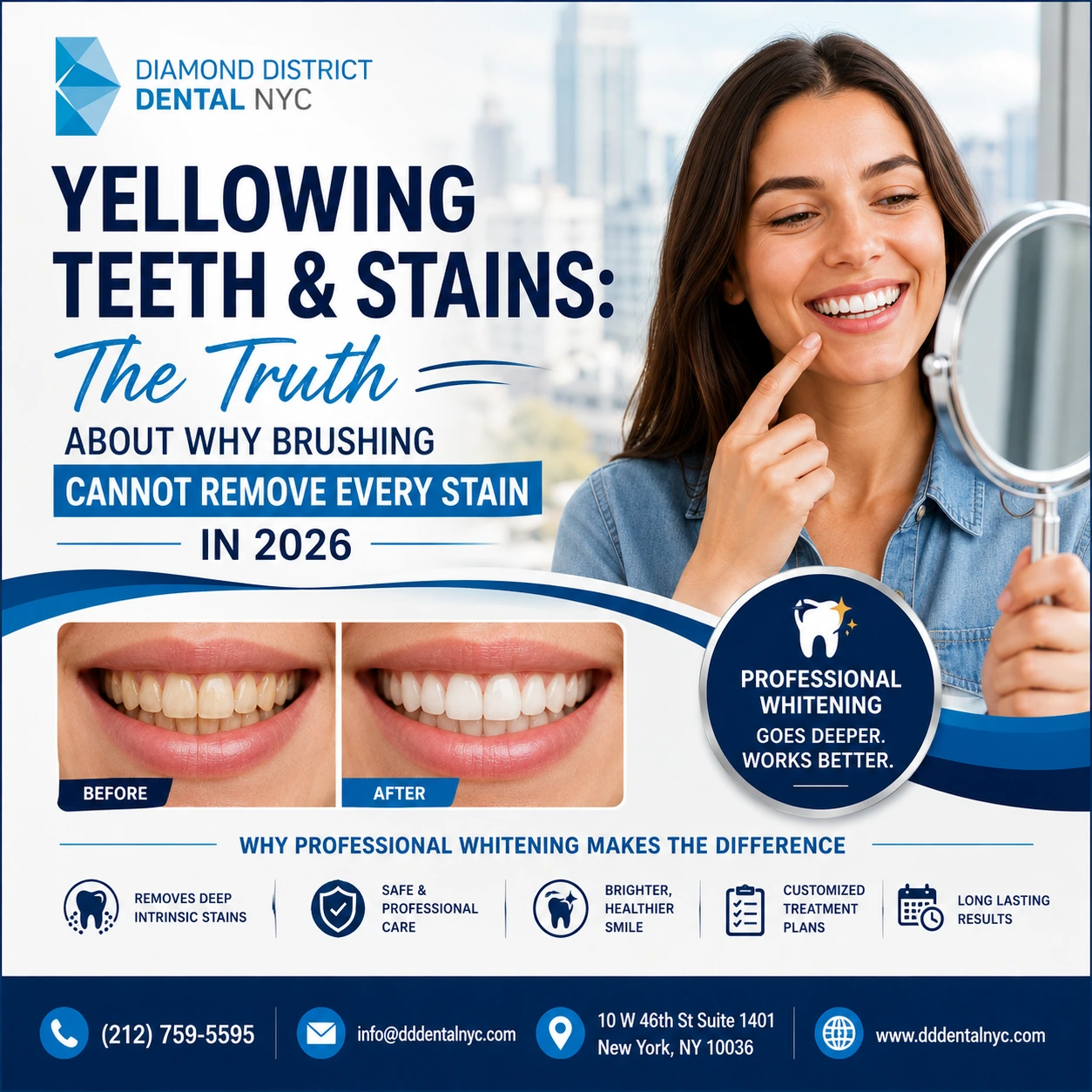
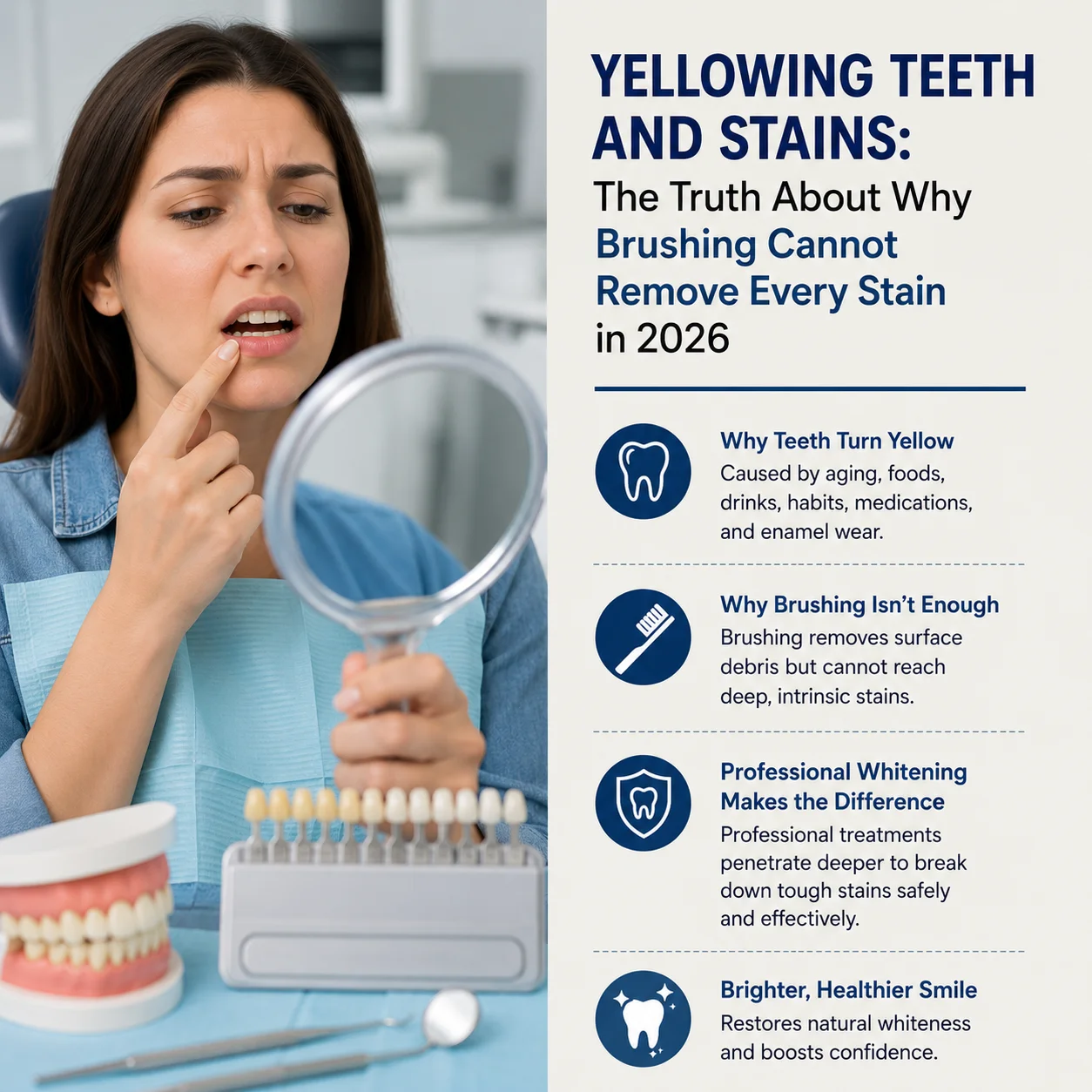
Tooth stain removal is a common concern for people who notice their teeth still look yellow even after regular brushing and flossing. While daily oral hygiene helps remove plaque and some surface stains, it cannot eliminate every type of discoloration. Some stains develop deep within the tooth structure due to long term habits, medications, aging, or enamel changes, making professional treatment necessary for noticeable improvement.
This is a common concern for patients in NYC, especially professionals and families who want a brighter smile without wasting time on products that promise unrealistic results. Professional whitening can be an effective option, but understanding what it can and cannot achieve is essential. The most appropriate treatment depends on the type of stain, the condition of your teeth and gums, and your cosmetic goals.
Why Do Teeth Turn Yellow in the First Place?
Have you ever noticed that some people seem to develop staining even when they brush faithfully? That is because tooth color is influenced by several factors, not just oral hygiene.
The outer layer of the tooth, called enamel, is naturally translucent. Beneath it sits dentin, which is more yellow in tone. As enamel wears over time, teeth may look darker or yellower even if they are healthy. Staining can also come from:
Some stains are extrinsic, meaning they sit on the surface. Others are intrinsic, meaning they develop inside the tooth structure. That distinction matters, because brushing can only do so much against intrinsic discoloration.
Why Brushing Cannot Remove Every Stain?
A common misconception is that if teeth are yellow, they must simply be dirty. In reality, many stains are not a sign of poor brushing at all.
Toothpaste contains mild abrasives that help lift surface debris and some surface stains. That is useful for daily maintenance. But toothpaste cannot penetrate deep discoloration or reverse the effects of enamel wear. Even whitening toothpastes have limits, especially when the issue is intrinsic staining, tetracycline related discoloration, fluorosis, or age related darkening.
Professional tooth stain removal uses stronger, dentist supervised whitening agents that can reach stains more effectively while protecting soft tissues and enamel health. That does not mean every smile will become dramatically white, but it does mean treatment can be tailored more precisely than at home products.
Professional Whitening and Tooth Stain Removal
What actually happens during professional whitening? In most cases, dentists use peroxide based whitening agents that break apart stain molecules inside and on the surface of the tooth. Depending on the case, treatment may be done in the office, with take home trays, or with a combined approach.
Professional whitening is often more effective than over the counter products because it offers:
- Higher strength whitening ingredients
- Custom treatment planning
- Better gum protection
- More even results
- Professional oversight if sensitivity occurs
That said, whitening is not the same as cleaning. If staining is caused by plaque buildup or tartar, a dental cleaning may be needed first. If a tooth has a filling, crown, or veneer, whitening will not change the color of those materials. A dental exam helps determine whether whitening is the right solution or whether another cosmetic option would work better.
Who Is a Good Candidate for Whitening?
Not everyone with yellow teeth is an ideal whitening candidate. That is why a professional evaluation matters.
- In general, whitening may be a good option for patients who have:
- Healthy teeth and gums
- Surface staining from food, drinks, or smoking
- Mild to moderate overall discoloration
- A desire to brighten natural tooth enamel
- Whitening may be less effective or not appropriate when a patient has:
- Untreated cavities
- Gum disease
- Severe tooth sensitivity
- White spots, enamel defects, or internal staining
- Front tooth restorations that would remain unchanged in color
- Pregnant or nursing status, depending on dental guidance
For patients in NYC comparing cosmetic options, this is one reason an exam is so helpful. A dentist can explain whether professional whitening alone is likely to help or whether a broader smile makeover might be a better fit.
Professional Whitening vs At Home Products
Below is a simple comparison of common whitening options.
|
Option |
How it Works |
Best For |
Limitations |
|
Whitening toothpaste |
Mild abrasives remove surface stains |
Daily maintenance and mild staining |
Cannot remove deep discoloration |
|
Over the counter strips |
Low concentration peroxide whitens surface and near surface stains |
Mild to moderate staining |
May cause uneven results, limited fit |
|
Custom take home trays |
Dentist prescribed whitening gel used in custom trays |
Patients who want gradual whitening at home |
Requires consistency and monitoring |
|
In office whitening |
Stronger whitening gel applied under dental supervision |
Faster results and more noticeable staining |
Sensitivity may occur, not effective for all discoloration |
|
Veneers or crowns |
Covers the tooth instead of whitening it |
Severe intrinsic staining or damaged teeth |
More invasive, does not whiten natural enamel |
This table shows why professional evaluation matters. The best treatment is not always the strongest one. It is the one matched to the cause of the stain.
What Professional Whitening Can and Cannot Fix?
Can whitening improve yellow teeth? Often yes. Can it make every tooth perfectly uniform and bright white? Not always.
Professional whitening is best for natural enamel that has surface staining or mild to moderate overall darkening. It may be less predictable for:
- A dental exam and shade evaluation
- Protection of the gums and soft tissues
- Application of whitening gel
- One or more treatment cycles
- Assessment of sensitivity and color change
For take home whitening, the dentist makes custom trays and provides instructions for wear time and frequency. Patients usually see gradual improvement over days or weeks.
Possible side effects may include temporary tooth sensitivity or mild gum irritation. These effects are usually short lived, but they should be discussed before treatment, especially for patients with a history of sensitivity.
What to Expect During Treatment?
What does whitening actually feel like? Most patients describe it as straightforward, but the experience depends on the method used.
For in office whitening, the process typically includes:
- A dental exam and shade evaluation
- Protection of the gums and soft tissues
- Application of whitening gel
- One or more treatment cycles
- Assessment of sensitivity and color change
For take home whitening, the dentist makes custom trays and provides instructions for wear time and frequency. Patients usually see gradual improvement over days or weeks.
Possible side effects may include temporary tooth sensitivity or mild gum irritation. These effects are usually short lived, but they should be discussed before treatment, especially for patients with a history of sensitivity.
How to Keep Teeth Brighter After Whitening?
Even the best tooth stain removal treatment needs maintenance. Without it, discoloration can gradually return over time.
- Helpful habits include:
- Brushing twice daily with fluoride toothpaste
- Flossing once daily
- Rinsing after coffee, tea, or wine
- Using a straw for dark beverages when appropriate
- Avoiding smoking and tobacco products
- Keeping up with regular dental cleanings
- Following any dentist recommended touch up plan
A few patients assume whitening permanently prevents stains. It does not. Think of whitening as a reset, not a permanent shield. Maintenance depends on diet, habits, and oral hygiene.
Why NYC Patients Often Seek Professional Whitening?
In a city like New York, appearance and convenience both matter. Many patients want results that fit into work schedules, social events, or photo heavy moments such as weddings and interviews. Professional teeth whitening in NYC can appeal to adults who want a more predictable option than guessing with drugstore products.
For busy professionals, the appeal often comes down to three things: time, supervision, and outcome control. A dentist can help balance whitening goals with sensitivity concerns, restorations, and the patient’s overall smile goals.
When Whitening Is Part of a Bigger Cosmetic Plan
Sometimes yellowing is only one piece of the picture. Teeth may also be chipped, crowded, worn, or uneven. In those cases, whitening may be combined with other services such as Invisalign, bonding, crowns, or veneers.
That is especially helpful for patients who want a more comprehensive smile transformation rather than a shade change alone. Whitening before orthodontic treatment or before replacing restorations may also help create a more balanced final result.
Common Stain Types and Likely Treatment
Stain Type | Typical Cause | Does Brushing Help? | Common Dental Approach |
Surface stains | Coffee, tea, wine, tobacco | Somewhat | Cleaning and whitening |
Plaque related discoloration | Inadequate brushing or flossing | Yes | Professional cleaning and hygiene improvement |
Age related yellowing | Enamel thinning over time | Limited | Whitening or cosmetic treatment |
Intrinsic staining | Medication, trauma, fluorosis | No or minimally | Whitening, bonding, veneers, or crowns |
Restoration color mismatch | Old fillings or crowns | No | Replacement or cosmetic planning |
Frequently Asked Questions
No. Brushing removes plaque and some surface stains, but it cannot eliminate deeper or intrinsic tooth discoloration. Professional tooth stain removal may be needed for stains caused by aging, medications, or long term habits.
Yes. Professional teeth whitening is generally safe for patients with healthy teeth and gums when performed under a dentist’s supervision. A dental examination helps determine whether whitening is the right treatment for your smile.
Whitening results can last from several months to a few years, depending on your diet, oral hygiene, and lifestyle habits such as smoking or drinking coffee. Periodic touch ups and regular dental care help maintain a brighter smile.
No. Professional whitening only lightens natural tooth enamel and does not change the color of crowns, veneers, fillings, or other dental restorations. Your dentist can recommend options if these restorations no longer match your natural teeth.
Some patients experience temporary tooth sensitivity or mild gum irritation after whitening, but these effects usually resolve within a few days. Your dentist can recommend products or treatment adjustments to help minimize discomfort.
A professional dental cleaning removes plaque, tartar, and surface buildup to improve oral health, while teeth whitening lightens the natural color of your teeth by reducing stains and discoloration. Many patients benefit from a cleaning before whitening treatment
the counter whitening products may improve mild surface stains, but they are generally less effective than professional whitening for deeper discoloration. Dentist supervised treatment provides stronger whitening agents, customized care, and more predictable results.
In many cases, whitening is recommended before placing crowns, veneers, or tooth colored fillings so they can be matched to your brighter natural tooth shade. Your dentist will recommend the best treatment sequence based on your overall smile goals and oral health.
Conclusion
Tooth discoloration is common, but not all stains are the same. Some respond to good brushing and regular cleanings, while others require professional tooth stain removal to achieve a noticeable change. If your teeth still look yellow after home care, the problem may be deeper than surface buildup.
Professional whitening can be an effective, carefully monitored option for many patients, especially when the stains are caused by food, drinks, tobacco, or age related enamel changes. For more complex discoloration, a dentist can explain whether whitening, bonding, veneers, or another cosmetic treatment would deliver the most natural looking result.
If you are considering tooth stain removal and want guidance tailored to your smile, schedule a consultation with Diamond District Dental NYC. Our team can evaluate the cause of discoloration, discuss whitening options, and help you choose a treatment plan that fits your goals and oral health needs.
Experience faster, more accurate, and more comfortable dental care with modern digital technology.
If you are considering tooth stain removal and want guidance tailored to your smile, schedule a consultation with Diamond District Dental NYC. Our team can evaluate the cause of discoloration, discuss whitening options, and help you choose a treatment plan that fits your goals and oral health needs.
Ready to book your dentist appointment in Midtown NYC, Visit our clinic or schedule your appointment today with our expert dental team