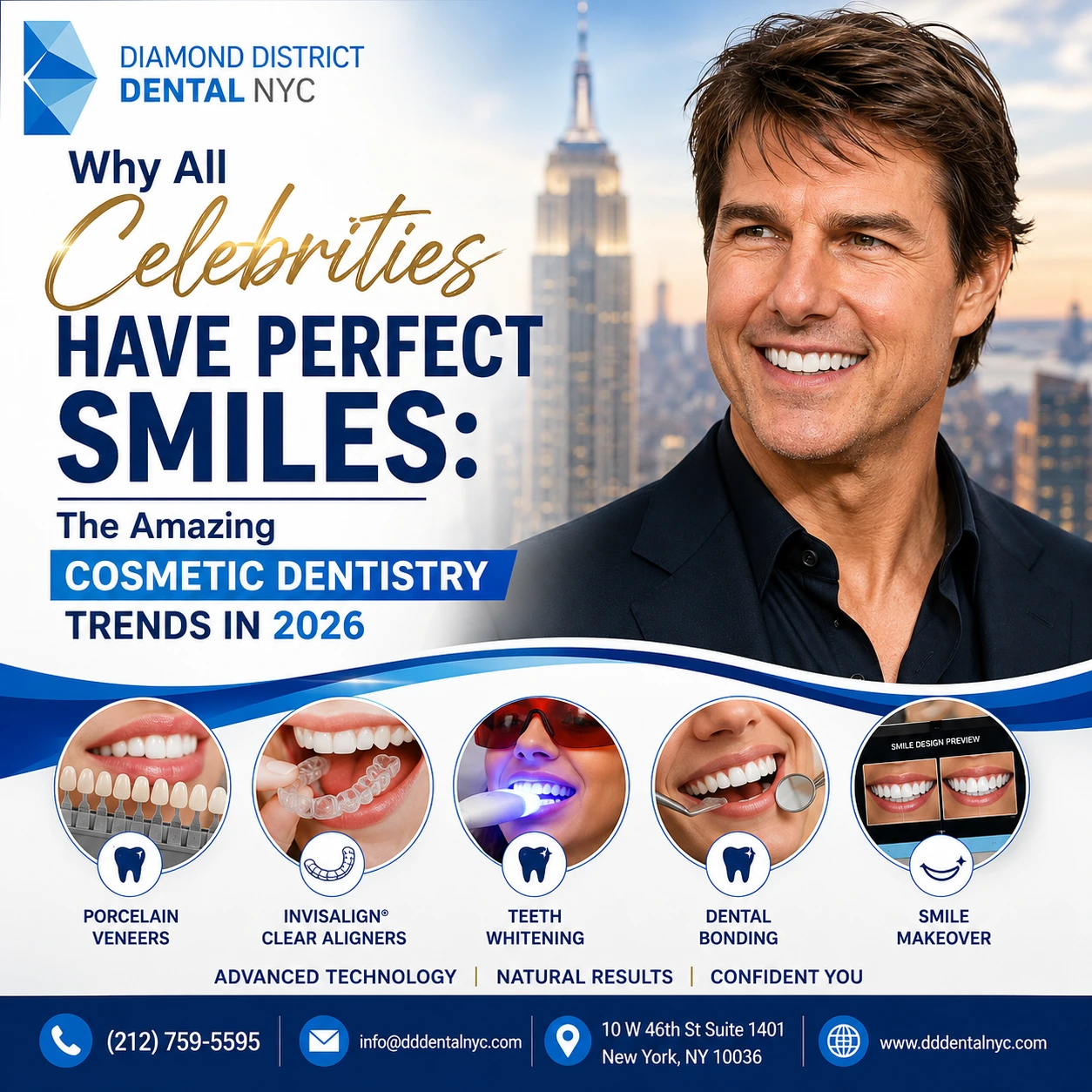
Why do celebrity smiles seem to look more natural, more balanced, and more personal every year?
answer is better dental technology. Part of it is a shift in patient expectations. And part of it is that the most noticeable celebrity smile trends are no longer about dramatic, overbuilt teeth. In 2026, the look people want is often cleaner, softer, and more believable.
That is why interest in cosmetic dentistry trends 2026 continues to grow. Patients in New York City are not just asking for whiter teeth anymore. They want smiles that fit their face, their age, and their lifestyle. They want treatment options that look polished in person and in photos, without crossing into the artificial.
This article breaks down what celebrity smiles are actually signaling in 2026, what cosmetic treatments can realistically achieve, and how to tell whether a trend is a good fit for your own smile.
What celebrity smile trends are really teaching us in 2026
A close look at celebrity smiles reveals a bigger shift in cosmetic dentistry. The ideal smile is no longer defined by one size fits all brightness or perfect symmetry.
Instead, the most modern smiles tend to have:
- Natural translucency
- Subtle shape variation
- Even but not overly uniform contours
- Brightness that matches the face
- Smile lines that support the lips and cheeks
This matters because many patients still assume cosmetic dentistry means making every tooth look identical. In reality, the most convincing results often preserve some individuality.
For example, a patient may want straighter front teeth but not a perfectly “same length” smile. Another patient may want whitening, not veneers. Someone else may only need bonding on a few worn edges. The right treatment depends on what is actually happening inside the mouth, not on a photo from a red carpet event.
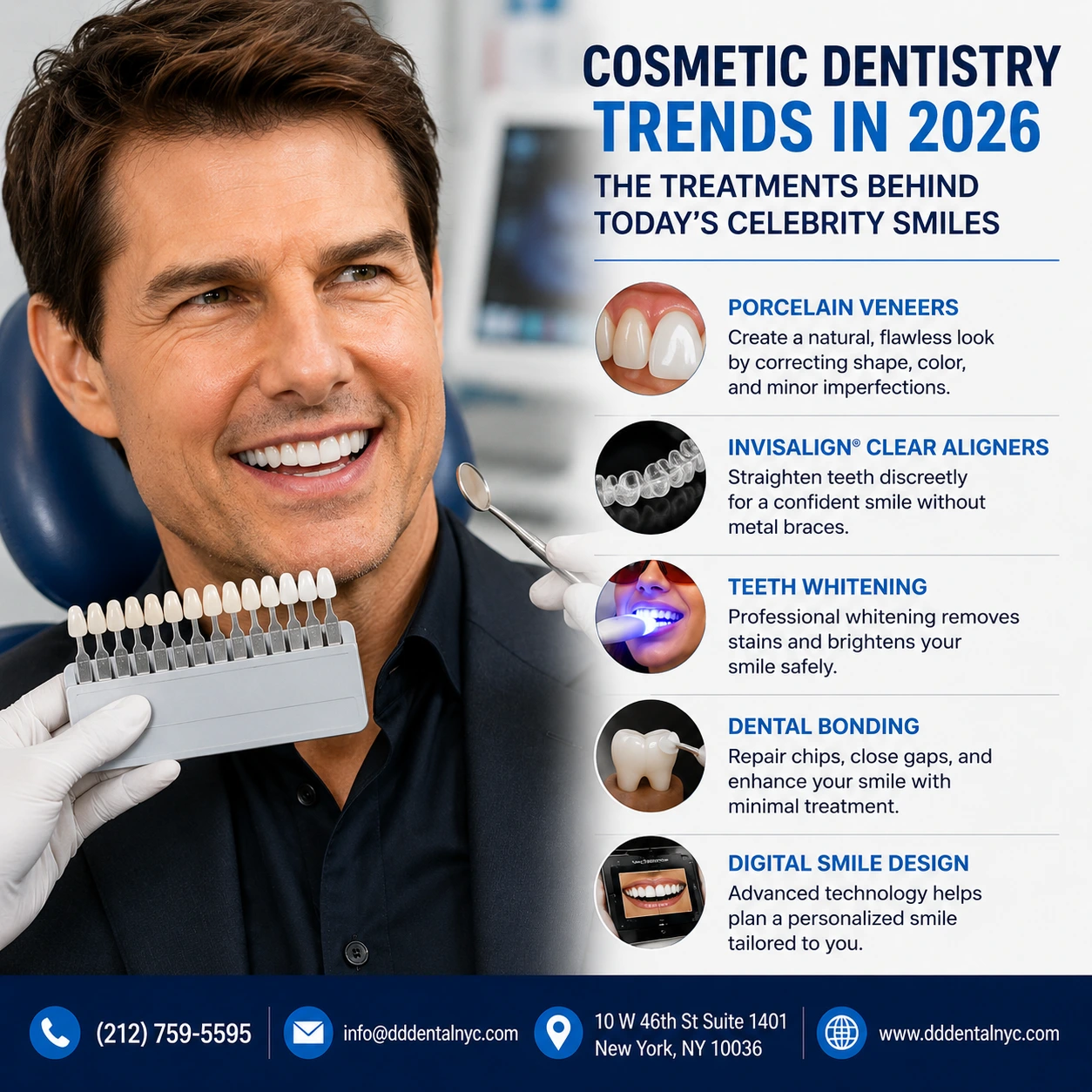
The phrase cosmetic dentistry trends 2026 covers more than aesthetics. It includes a growing preference for conservative treatment planning, digital smile previews, and treatments that improve both appearance and function.
Here are the trends shaping smile design this year:
1. More natural looking veneers
Veneers remain one of the most requested cosmetic treatments, but the design philosophy has changed. Patients are asking for thinner, more lifelike veneers that blend with facial features instead of standing out.
Good candidates often include adults with:
- Chipped or worn teeth
- Mild discoloration that whitening cannot fix
- Small gaps
- Uneven shape or size concerns
Limitations:
- Veneers are not ideal for everyone
- Teeth and gums must be healthy first
- Some enamel removal is often required
- They are not a substitute for orthodontic correction in every case
2. Invisalign and discreet orthodontic care
Straightening teeth is still central to smile aesthetics. Invisalign has become especially appealing to adults and professionals who want gradual change without the appearance of traditional braces.
Best suited for:
- Mild to moderate crowding
- Spacing issues
- Relapse after earlier orthodontic treatment
- Adults seeking a lower visibility option
Limitations:
- Complex bite problems may require other treatment
- Consistent wear is essential
- Alignment is not instant
3. Whitening that avoids an overdone look
A very bright smile can still look beautiful, but patients are increasingly requesting whitening that suits their skin tone and age rather than the brightest possible result.
Professional whitening can help with:
- Coffee, tea, and wine staining
- General yellowing over time
- Pre cosmetic treatment preparation
Limitations:
- Whitening does not change the color of crowns, fillings, or veneers
- Sensitivity can occur
- Results vary from person to person
4. Small corrections with big impact
Not every smile transformation requires a full makeover. In 2026, many patients are choosing selective improvements such as bonding, contouring, or replacing old restorations.
This can be a smart approach for:
- Minor chips
- Slight unevenness
- Small spaces
- Older restorations that no longer match surrounding teeth
5. Digital planning and smile previews
Digital tools now make it easier to plan cosmetic care with more precision. Smile design software, photos, scans, and mockups help patients understand what treatment may look like before they begin.
This does not mean the final result is guaranteed to match a preview exactly. But it does help create better communication between patient and dentist, which is especially useful when multiple cosmetic options are being considered.
How celebrity smile aesthetics influence real dental care
Celebrity smiles tend to shape public expectations, even when patients do not want the same exact look. The influence is often subtle.
A patient may point to a celebrity and say:
- “I want my teeth whiter, but still natural”
- “I like the shape of that smile”
- “I want my teeth to look straighter in photos”
- “I do not want them to look fake”
That conversation is useful because it helps define the goal. Still, the celebrity reference is only a starting point. A professional evaluation matters because tooth shape, gum levels, bite position, and facial proportions all influence what is possible.
Someone with short teeth may need a different approach than someone with worn enamel. A patient with gum recession may need periodontal care before cosmetics. A person with frequent grinding may need protection before investing in veneers or bonding.
Tom Cruise's Smile Transformation: What Cosmetic Dentistry Can Achieve
One of the most discussed celebrity smile transformations is Tom Cruise’s. Early in his acting career, photographs showed teeth that were noticeably crowded, uneven in color, and featured a well known off center front tooth that became a recognizable part of his smile. As his career progressed, his smile gradually became straighter, brighter, and more balanced, making it one of Hollywood’s most recognized transformations.
Unlike dramatic television makeover stories, Tom Cruise’s smile did not appear to change overnight. Dental professionals generally believe his transformation happened over several years through a combination of orthodontic and cosmetic treatments rather than a single procedure. While the complete treatment plan has never been officially confirmed, experts frequently point to ceramic braces, professional teeth whitening, porcelain veneers, and possibly dental crowns as the treatments that contributed to his current smile.
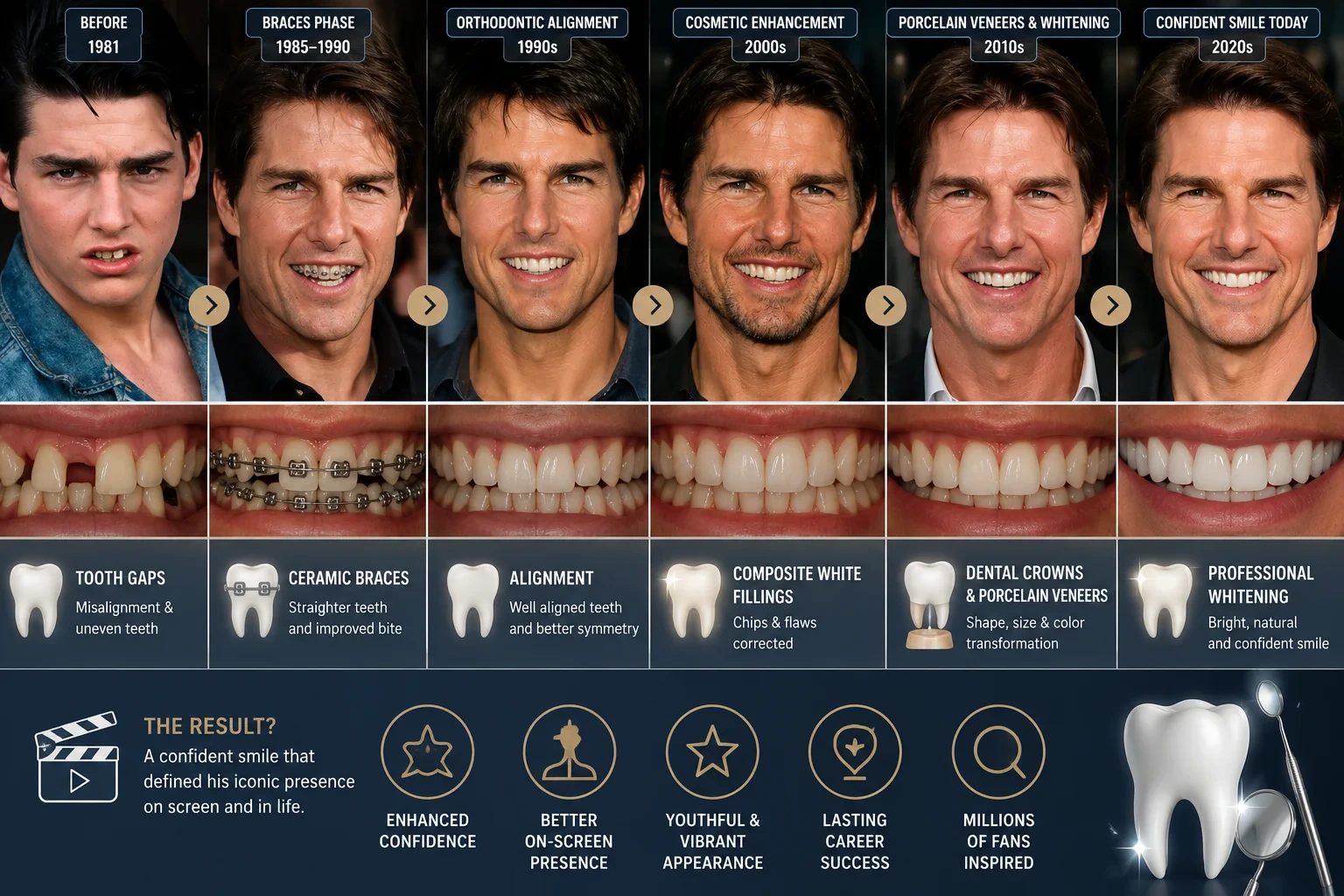
Tom Cruise Before and After Smile Transformation
Before treatment, Tom Cruise’s smile showed several cosmetic concerns that are common among everyday dental patients.
- These included:
- Crowded front teeth
- An off center dental midline often called the "middle tooth"
- Tooth discoloration
- A chipped front tooth from an earlier injury
- Uneven tooth proportions
- After treatment, his smile appeared:
- Straighter and more symmetrical
- Noticeably whiter
- Better balanced with his facial features
- More natural looking while still retaining individual character
- Camera ready for film and public appearances
Although many online sources suggest porcelain veneers and dental crowns were used, these procedures have never been officially confirmed by Tom Cruise or his dental team. The only documented treatment visible in public photographs is his ceramic braces.
What Can Patients Learn from Tom Cruise's Smile?
Tom Cruise’s transformation highlights an important lesson about modern cosmetic dentistry. A confident smile is usually created through careful planning rather than a single cosmetic procedure.
For many patients, treatment may involve:
- Orthodontics such as Invisalign or braces to improve alignment
- Professional teeth whitening to brighten the smile
- Porcelain veneers for shape and color correction
- Dental crowns when damaged teeth need additional strength
- Cosmetic bonding for minor chips and imperfections
The right combination depends on each patient’s oral health, bite, facial proportions, and cosmetic goals rather than trying to duplicate a celebrity’s smile.
How His Smile Transformation Changed His Appearance
Tom Cruise’s smile makeover is often cited because it enhanced much more than the appearance of his teeth. A straighter and healthier looking smile helped create a more polished, youthful, and confident appearance throughout his career. His transformation demonstrates how cosmetic dentistry can improve smile harmony while preserving a person’s natural identity rather than creating an artificial look.
Popular cosmetic treatments and what they can do
|
Treatment |
Best for |
Typical benefit |
Limitations |
|
Surface and internal staining |
Brighter smile in a short time |
Does not change tooth shape or alignment |
|
|
Mild to moderate alignment issues |
Straighter teeth with a discreet look |
Requires daily wear and time |
|
|
Shape, color, and minor alignment concerns |
Dramatic cosmetic improvement |
Not ideal for every patient, enamel changes may be needed |
|
|
Small chips, gaps, and uneven edges |
Quick conservative improvement |
Less durable than veneers |
|
|
Multiple concerns at once |
Customized full smile plan |
May involve multiple visits and treatments |
What patients in NYC often ask for
New York City patients tend to be highly informed and time conscious. Many want cosmetic results that fit professional life, social settings, and high quality photo environments. They also tend to ask practical questions before committing to treatment.
Common goals include:
- Looking refreshed without looking overdone
- Improving confidence for work or events
- Correcting visible wear from stress or grinding
- Brightening teeth while keeping a natural appearance
- Fixing a few noticeable flaws rather than changing everything
Common misconceptions about celebrity smile trends
“Everyone in entertainment gets veneers”
Not necessarily. Some people use whitening, orthodontics, bonding, gum contouring, or a combination of smaller treatments. What looks like one dramatic procedure is often a layered plan.
“A brighter smile is always a better smile”
Not always. Teeth that are too bright for the face can look artificial. Shade selection should be individualized.
“Cosmetic dentistry is only about looks”
Many treatments can also improve function, wear, and comfort. For example, repairing worn edges may help protect teeth from further damage.
“Fast results mean better results”
Some treatments are quick. That does not mean they are automatically the best choice. A careful diagnosis usually leads to more predictable and durable outcomes.
how to think about the right cosmetic choice
|
Smile concern |
First questions to ask |
Possible treatment types |
|
Is the discoloration internal or external? |
Whitening, polishing, veneers |
|
|
Is the bite also affected? |
Invisalign, braces, bonding |
|
|
Is the chip minor or structural? |
Bonding, veneers, crowns |
|
|
Are they small or part of a bite issue? |
Invisalign, bonding, veneers |
|
|
Uneven smile line |
Are teeth worn, or is gum tissue involved? |
Contouring, crowns, gum evaluation |
Who is a good candidate for cosmetic smile treatment
A good candidate is not just someone who wants a better smile. They are also someone whose oral health supports cosmetic care.
- Ideal candidates usually have:
- Healthy gums or gum disease that is being treated
- Realistic expectations
- Good home care habits
- Good home care habits
- An understanding of treatment maintenance
- Patients may need other care first if they have:
- Active decay
- Untreated gum disease
- Significant grinding
- Large untreated bite problems
- Pain or infection
How to choose between subtle enhancement and a full smile makeover
Not every smile needs a full transformation. In fact, many patients do better with a targeted plan.
- A subtle enhancement may include:
- Whitening
- Bonding on one or two teeth
- Minor contouring
- Replacing old fillings that show when smiling
- A full smile makeover may include:
- Whitening
- Invisalign
- Veneers or crowns
- Gum contouring
- Restorative dentistry when needed
Patients often assume a major change is the only way to improve confidence. In practice, a well planned series of small upgrades can sometimes create a more natural and cost conscious result.
What to expect from a professional consultation
- A cosmetic consultation typically includes:
- Discussion of goals and concerns
- Clinical exam of teeth and gums
- Bite assessment
- Photos or digital scans
- Review of treatment options
- Discussion of timing, maintenance, and limitations
A thoughtful consultation should also address what will not change. For example, veneers cannot straighten a severely misaligned bite by themselves, and whitening will not alter the appearance of existing dental work.
This level of clarity helps patients make informed decisions and reduces disappointment later.
Frequently Asked Questions
Yes. Many celebrity smile trends can be adapted for everyday patients, but the best results come from a treatment plan tailored to your teeth, gums, bite, facial features, and goals rather than copying someone else’s smile.
The most requested cosmetic dental treatments include professional teeth whitening, Invisalign, dental veneers, and cosmetic bonding. The right option depends on your smile goals and overall oral health.
Yes. Many patients achieve a natural looking smile with teeth whitening, Invisalign, cosmetic bonding, or minor tooth contouring without needing dental veneers. Your dentist can recommend the most suitable treatment
The lifespan of cosmetic dental treatments varies. Teeth whitening may need periodic touch ups, while veneers, bonding, and Invisalign results can last for years with good oral hygiene and regular dental care.
No. Cosmetic dentistry is suitable for adults of all ages. Many patients choose treatment to improve stained, worn, chipped, or uneven teeth and achieve a healthier, more confident smile.
Yes, depending on the severity of the misalignment. Invisalign is often recommended for straighter teeth, while bonding or veneers may help improve the appearance of minor alignment issues
Yes. Healthy teeth and gums are the foundation of successful cosmetic dentistry. Your dentist will treat any cavities, gum disease, or other oral health concerns before beginning cosmetic procedures.
The best way is to schedule a cosmetic dental consultation. Your dentist will evaluate your oral health, discuss your goals, and recommend personalized treatment options that deliver natural looking, long lasting results.
Conclusion
The biggest lesson from cosmetic dentistry trends 2026 is that the best smiles are not necessarily the flashiest. They are the ones that look believable, function well, and fit the person wearing them.
Celebrity smile trends are moving toward softer, more natural results, and that has changed the way patients think about cosmetic care. Whether you are considering whitening, Invisalign, veneers, bonding, or a full smile makeover, the right plan depends on your oral health, your goals, and the details of your bite and facial structure.
For patients in NYC, that often means balancing aesthetics with practicality. A carefully designed treatment plan can improve confidence without looking overdone.
If you are exploring Cosmetic dentistry trends and want to know what may be possible for your smile, schedule a consultation with Diamond District Dental NYC. Our team can help you review your options, compare treatments, and build a plan that fits your goals and oral health needs.