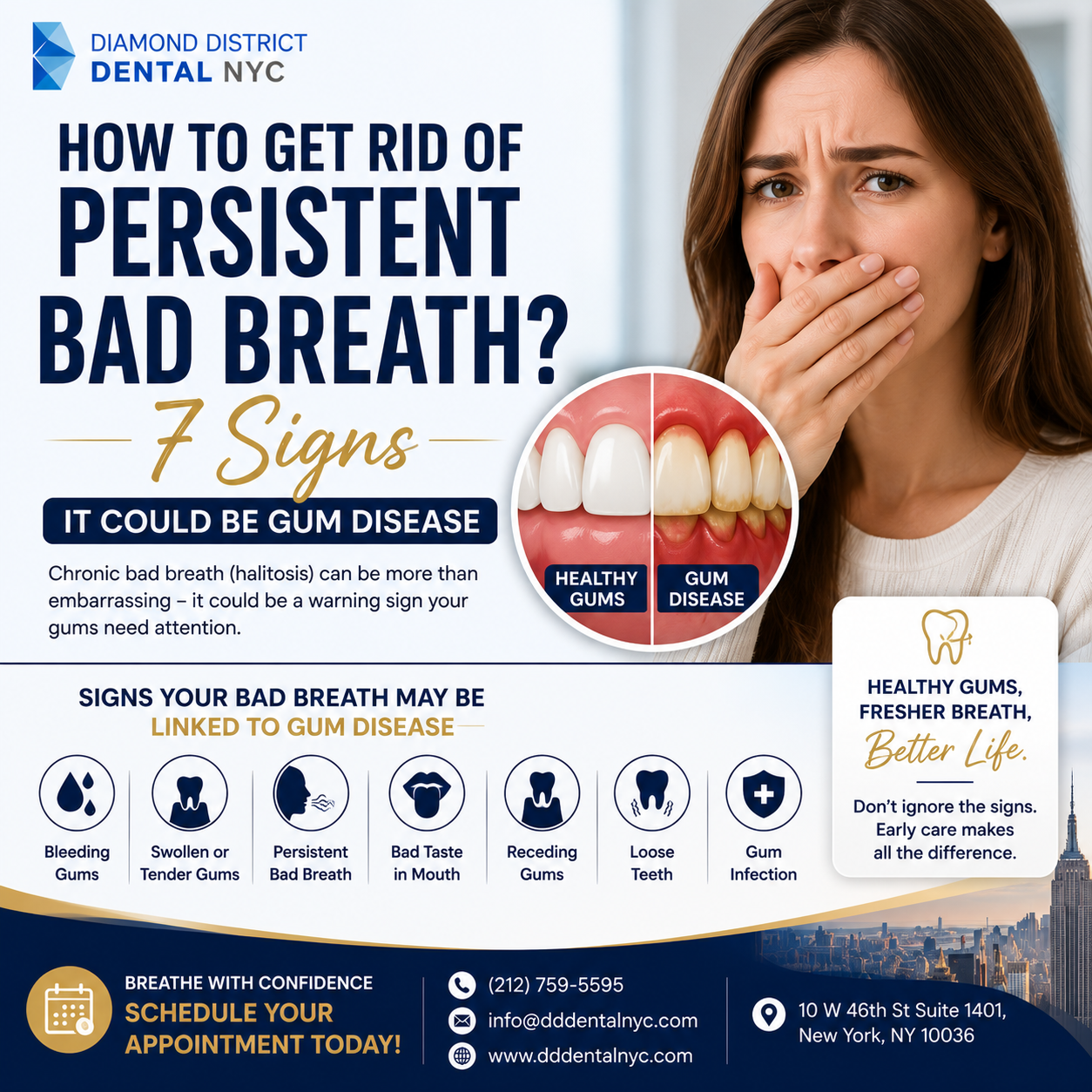
If you have tried mints, mouthwash, and extra brushing but still wonder how to get rid of persistent bad breath, the answer may involve more than your tongue or your last meal. Bad breath that keeps coming back can be a sign of an underlying oral health issue, and gum disease is one of the most common culprits.
Halitosis is often temporary and harmless, but persistent bad breath deserves attention. In many cases, it starts with plaque buildup, dry mouth, or food debris. In others, it may point to gingivitis or periodontitis, especially if you also notice bleeding gums, a bad taste in your mouth, or gum tenderness. Understanding the difference can help you choose the right treatment and avoid overlooking a more serious problem.
For patients in NYC with busy schedules, this can be especially frustrating. You may brush before meetings, carry breath mints everywhere, and still feel self conscious during conversations. The good news is that chronic bad breath is often manageable once the cause is identified. A dental exam can help determine whether the issue is simple hygiene, a dental infection, or gum disease that needs professional care.
Why persistent bad breath should not be ignored?
A strong breath odor once in a while is usually not a major concern. Garlic, coffee, alcohol, and even morning dryness can cause temporary odor. Persistent bad breath is different. If it keeps returning despite good home care, your mouth may be signaling an ongoing problem.
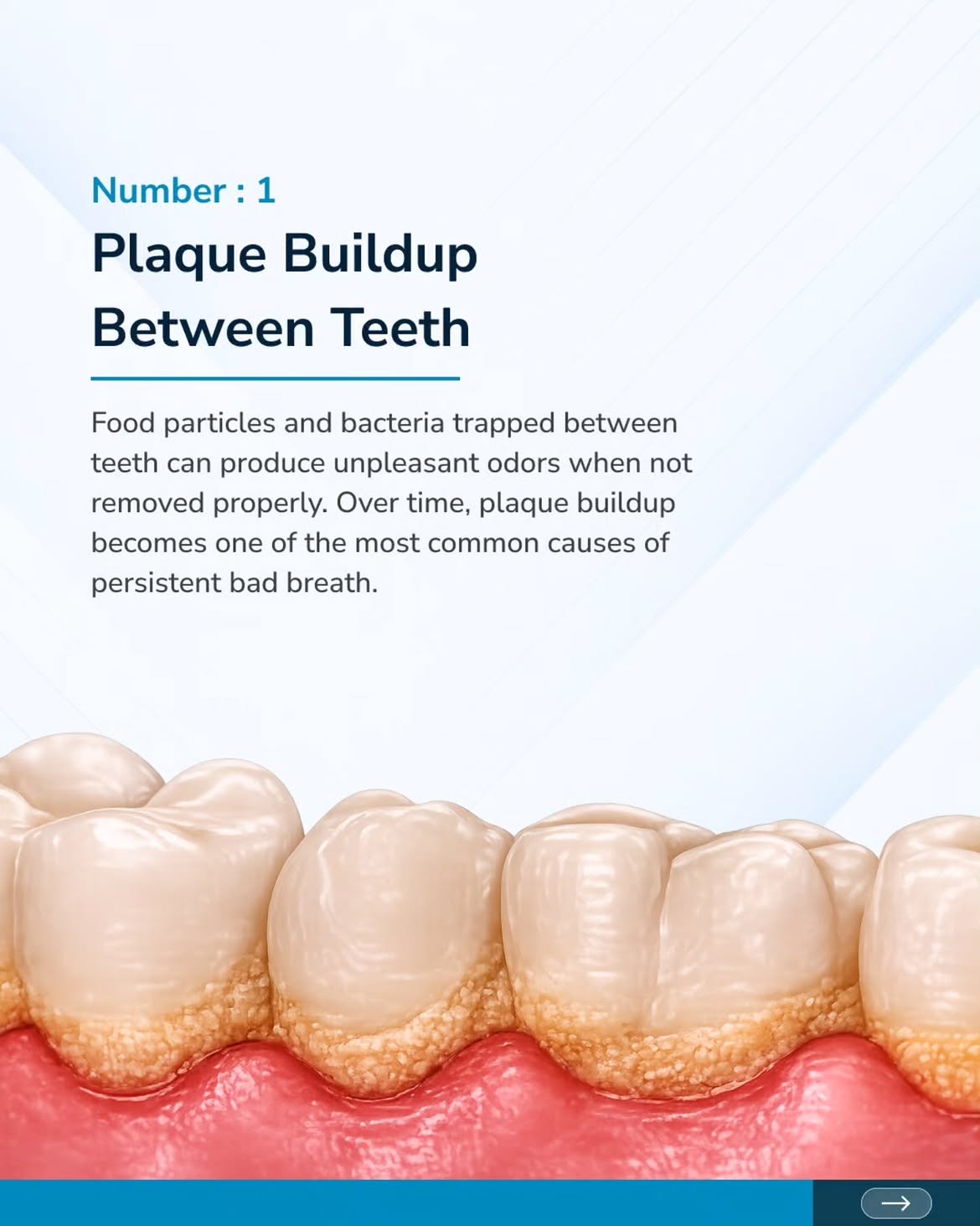
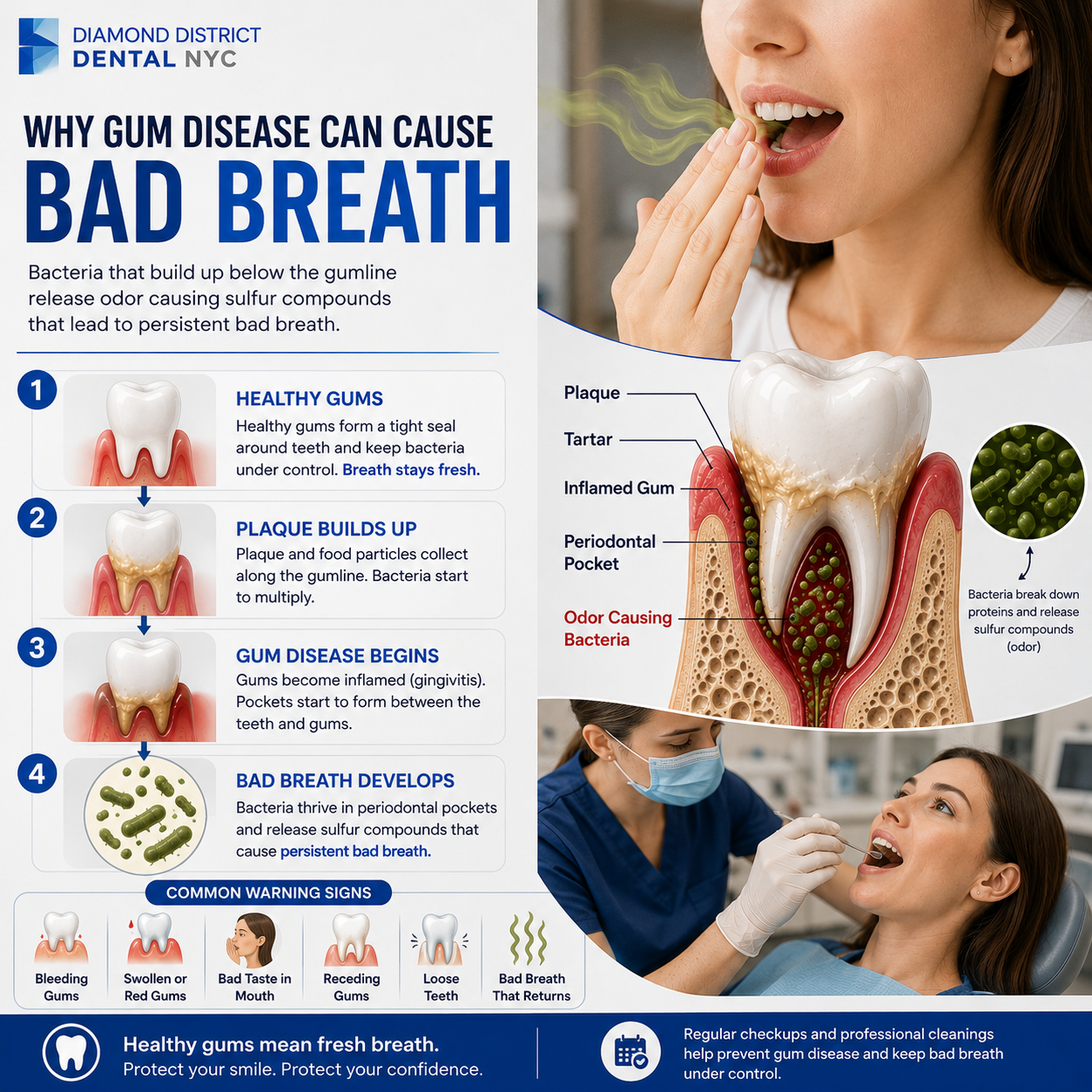
One of the most common misconceptions is that bad breath only comes from the stomach. In reality, most cases begin in the mouth. Bacteria break down food particles and release sulfur compounds that create odor. If plaque and tartar accumulate around the gums, these bacteria can multiply and worsen both odor and inflammation.
Common signs that bad breath may be linked to gum disease include:
- Bleeding when brushing or flossing
- Red, swollen, or tender gums
- Receding gums
- A bad taste in the mouth
- Loose teeth in more advanced cases
- Odor that returns soon after brushing
If these symptoms sound familiar, a dental evaluation is important. Catching gum disease early often makes treatment simpler and more effective.
How to get rid of persistent bad breath?
The best way to get rid of persistent bad breath depends on the cause. If the odor is coming from plaque buildup, gum disease, dry mouth, or a dental infection, home remedies alone usually will not solve it for long.
A useful first step is to focus on the basics that reduce bacterial buildup:
- Brush twice daily for two minutes with fluoride toothpaste
- Clean between teeth once a day with floss or interdental brushes
- Brush your tongue gently
- Drink water regularly, especially if your mouth feels dry
- Limit frequent snacking on sugary foods
- Replace your toothbrush every three to four months
- Keep up with professional cleanings
That said, if gum disease is involved, oral hygiene alone may not be enough. Once tartar forms below the gumline, it cannot be removed with a toothbrush. A dentist or hygienist may recommend a deep cleaning, also called scaling and root planing, to remove bacteria and help the gums heal.
A practical example
A patient might notice that breath mints help for 10 minutes, but the odor always comes back by midday. That pattern often suggests the source is not just food or dryness. If the gums bleed and the tissue looks inflamed, the problem may be periodontal rather than cosmetic.
Why gum disease can cause bad breath?
Gum disease develops when plaque irritates the gum tissue. In the earliest stage, gingivitis, the gums may be red, puffy, and prone to bleeding. If plaque is not removed, the condition can progress to periodontitis, where infection damages the structures that support the teeth.
As the disease advances, bacteria thrive in periodontal pockets, the small spaces that form between the teeth and gums. These pockets can trap debris and release odor causing compounds. That is why bad breath and gum disease often appear together.
A key point is that gum disease does not always hurt at first. Many people assume they would feel pain if something were wrong, but periodontal disease can be surprisingly quiet in the beginning. Bad breath may be one of the earliest clues.
Persistent bad breath causes: what else should be considered
Gum disease is an important possibility, but it is not the only one. A dentist will also consider other common causes.

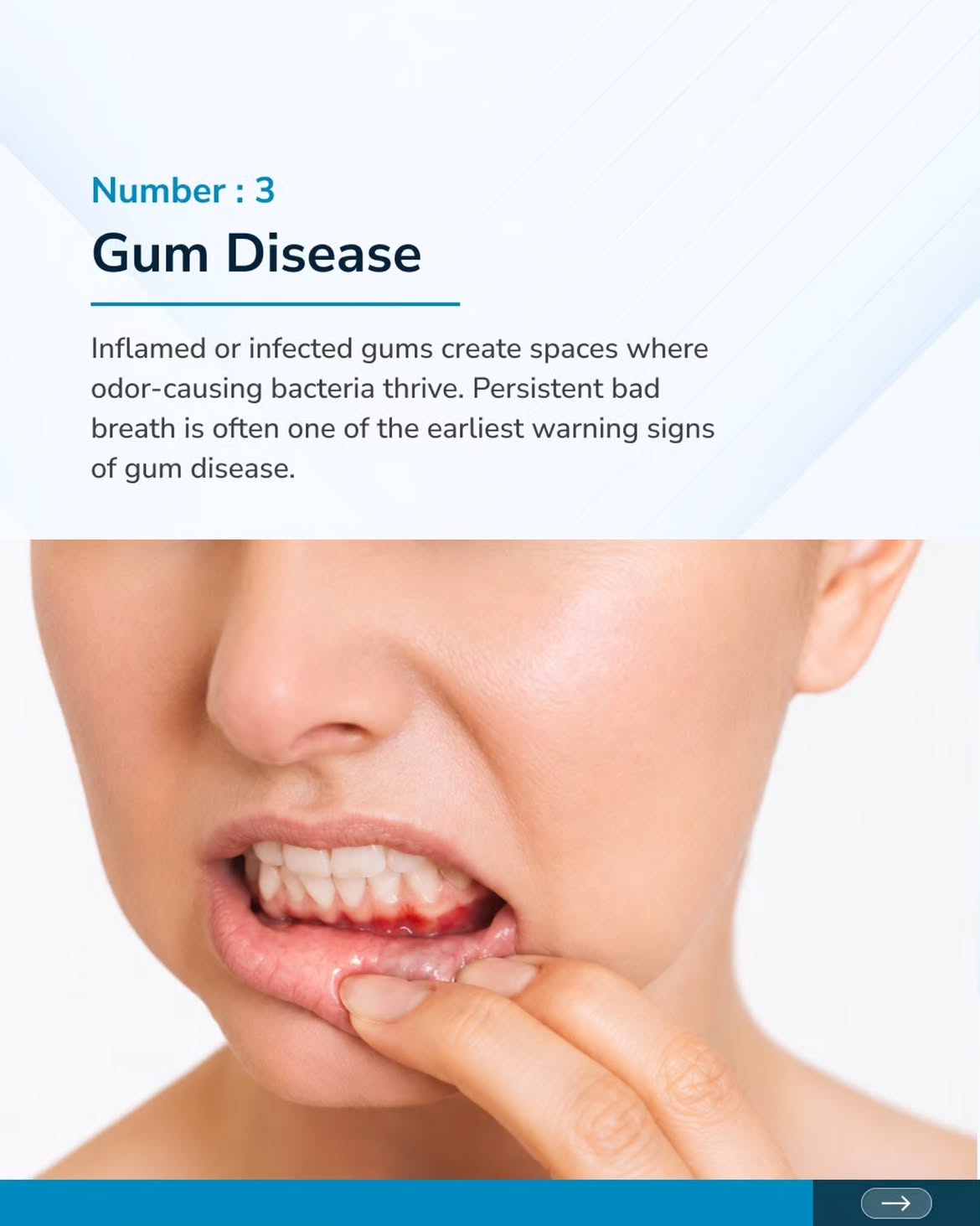
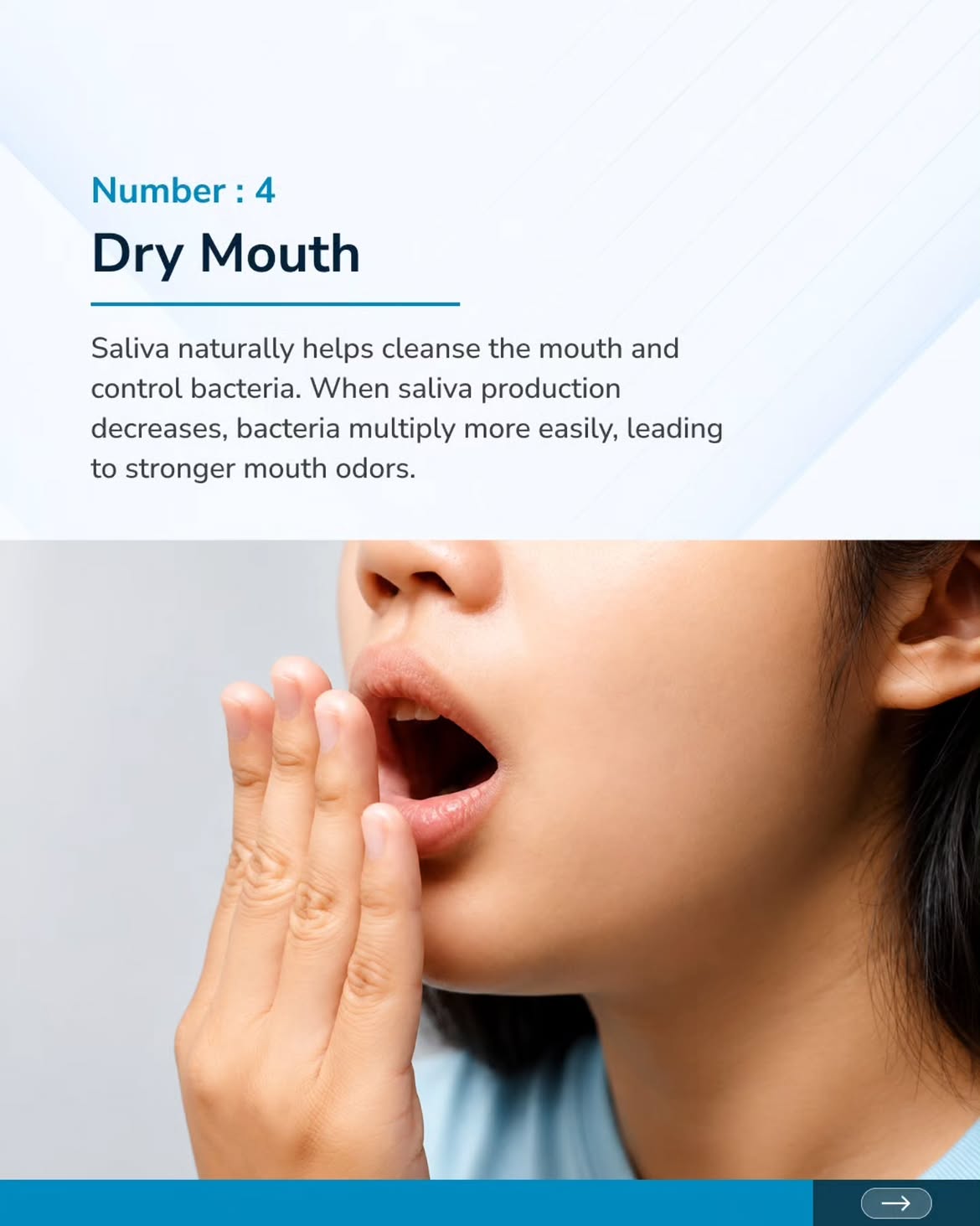
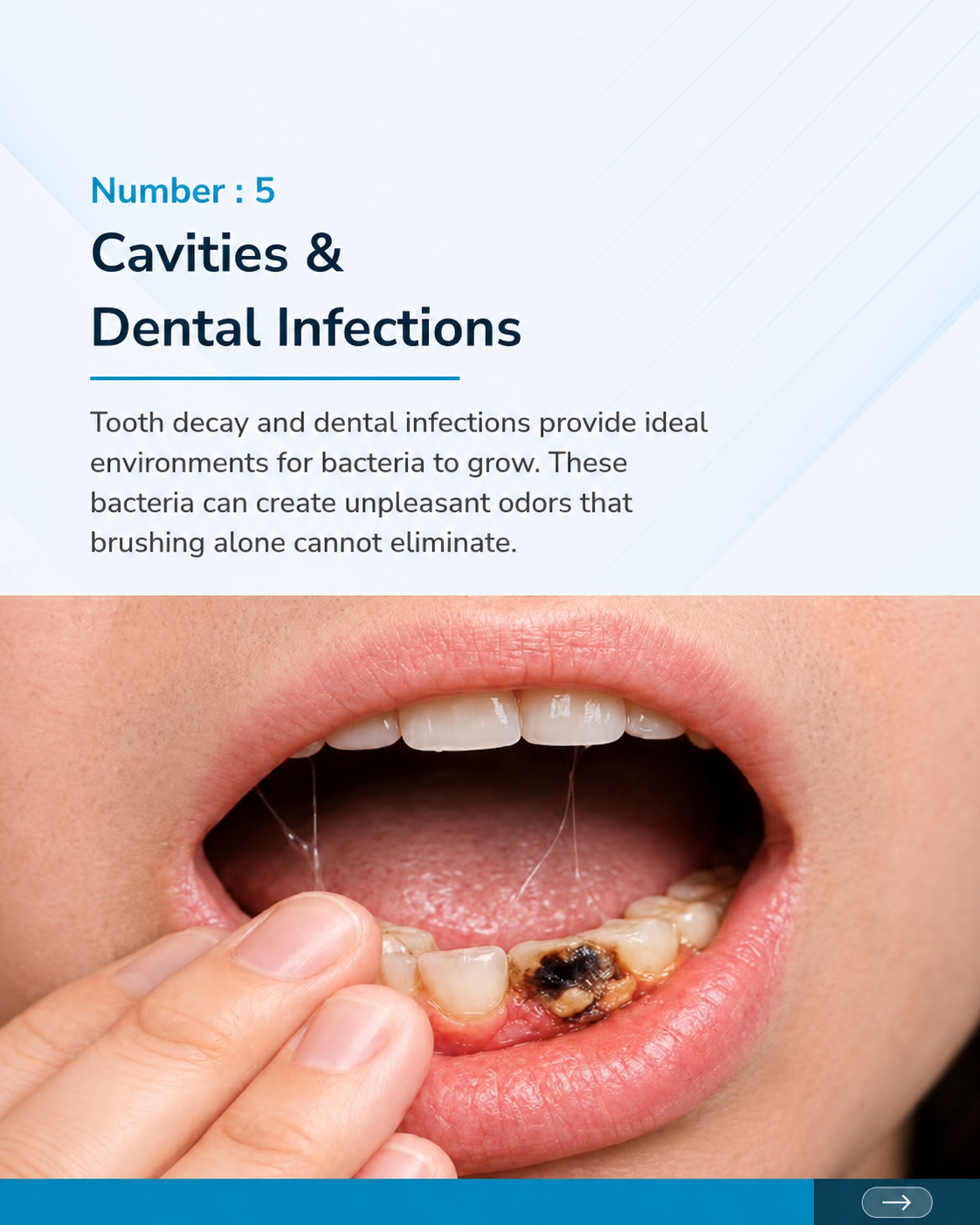


Some persistent bad breath causes include:
- Dry mouth from medications, dehydration, mouth breathing, or certain health conditions
- Cavities or infected teeth
- Food trapped around dental work or between crowded teeth
- Poorly fitting restorations
- Sinus or throat infections
- Smoking or tobacco use
- Diet patterns that increase odor temporarily
- Reflux or some digestive issues, less commonly
This is why self diagnosis can be unreliable. The same symptom may have a different source in different patients. A thorough exam helps pinpoint the cause and guide treatment.
Common causes of bad breath
Possible cause | Typical clues | What may help | When to see a dentist |
|---|---|---|---|
Poor oral hygiene | Odor improves after brushing, plaque on teeth | Better brushing, flossing, tongue cleaning | If odor persists after home care |
Dry mouth | Cotton mouth, trouble swallowing, sticky saliva | More water, saliva support, medication review | If dryness is frequent or severe |
Gum disease | Bleeding gums, swelling, receding gums | Professional cleaning, periodontal treatment | Promptly, especially if symptoms worsen |
Tooth decay or infection | Tooth sensitivity, pain, swelling, localized odor | Dental restoration or treatment | As soon as possible |
Food traps or dental work issues | Odor from a specific area, floss catches debris | Cleaning around the area, dental adjustment | If recurring |
Smoking or tobacco | Lingering odor, gum irritation | Quitting support, professional care | Yes, because tobacco increases gum risk |
What does a dentist look for during evaluation?
If you visit Diamond District Dental NYC for persistent bad breath, the evaluation typically focuses on both the teeth and the gums. The goal is to identify the true source rather than just masking odor.
A dental exam may include:
- Reviewing your symptoms and home care routine
- Checking for gum inflammation and pocketing
- Looking for plaque, tartar, cavities, or infection
- Assessing dry mouth signs
- Evaluating dental restorations or food traps
- Recommending X-rays if needed
This type of visit is especially helpful if you have tried over the counter mouthwash without success. Mouthwash may temporarily reduce odor, but it does not treat gum disease or remove tartar below the gumline.
Treatment options for bad breath linked to gum disease
If gum disease is the cause, treatment usually focuses on removing bacteria and helping the gums heal. The exact plan depends on how advanced the condition is.
Common treatment approaches
- Professional dental cleaning: Best for mild buildup above the gums or early gingivitis. This can help reduce inflammation and odor when disease has not advanced.
- Scaling and root planing: Often recommended for periodontal disease. This deep cleaning removes plaque and tartar from below the gumline and smooths root surfaces so the gums can reattach and heal.
- Improved home care plan: Your dentist may recommend a different brushing method, interdental cleaning tools, or a prescription rinse in some cases.
- Follow up periodontal maintenance: Patients with a history of gum disease often need more frequent cleanings to help prevent recurrence.
- Treatment of decay or infection: If a cavity, abscess, or failing dental work is contributing to odor, that issue must be treated directly.
Who is a good candidate for deep cleaning?
A deep cleaning may be appropriate for patients who have:
- Gum pockets
- Bleeding gums
- Tartar beneath the gumline
- Bone loss signs on X-rays
- Ongoing bad breath related to periodontal inflammation
What are the limitations?
Deep cleaning can improve breath and gum health, but it is not a one time cure if the patient returns to the same habits or misses maintenance visits. Some advanced cases may require ongoing periodontal therapy or referral for specialized care.
Home care steps that actually help
If you are trying to figure out how to get rid of persistent bad breath, your daily habits matter a lot. Small changes can make a noticeable difference, especially when combined with professional dental care.
Helpful habits include:
- Brush the gumline gently, not aggressively
- Floss daily to remove trapped bacteria
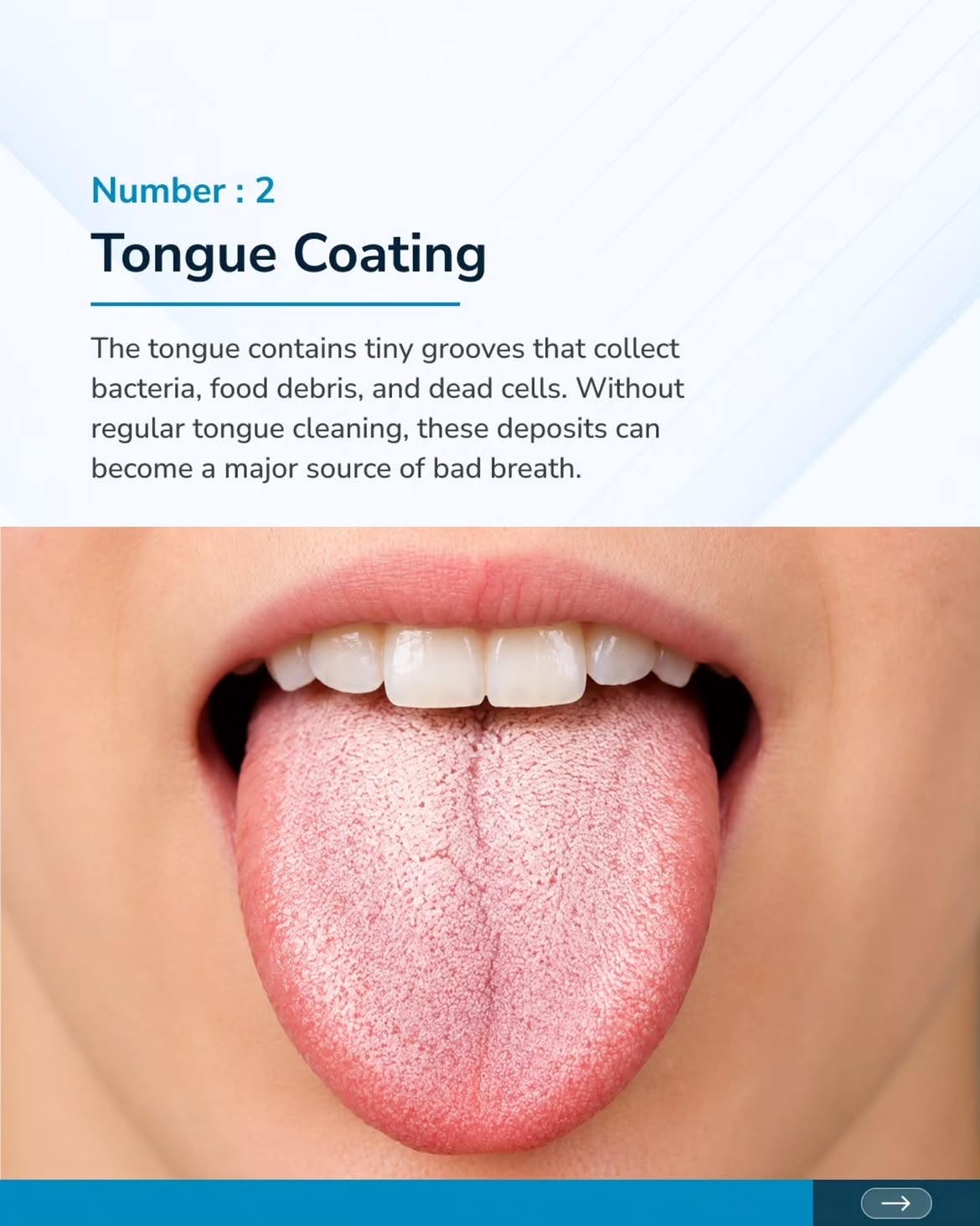
- Clean the tongue, where odor causing bacteria often collect
- Use alcohol free mouthwash if dryness is an issue
- Stay hydrated throughout the day
- Chew sugar free gum if appropriate to stimulate saliva
- Avoid tobacco products
- Keep regular dental visits
Some people over brush because they think harder scrubbing means cleaner teeth. That can irritate the gums and make things worse. A consistent, gentle routine is more effective than an aggressive one.
When to seek urgent dental care
Bad breath alone is not always an emergency, but certain symptoms should prompt a timely dental visit.
Call a dentist soon if you have:
- Swollen gums that bleed easily
- Persistent bad taste or odor despite good hygiene
- Loose teeth
- Gum recession
- Pain when chewing
- Facial swelling
- A visible abscess or pus
- Fever along with oral symptoms
These signs may indicate an infection or more advanced periodontal disease. Early evaluation can prevent complications and help preserve oral health.
How gum disease treatment can improve more than breath
Patients often seek care because of breath concerns, but treating gum disease can offer broader benefits. Healthier gums may reduce bleeding, improve comfort while eating, and protect the teeth from further support loss.
Possible benefits of treatment may include:
- Fresher breath
- Reduced gum inflammation
- Less bleeding during brushing and flossing
- Improved ability to clean the teeth
- Lower risk of further periodontal damage
Results vary based on severity, home care, and follow up. Some patients notice improvement quickly after treatment, while others need several visits and maintenance care to stabilize gum health.
What to expect from common solutions?
Treatment or step | Best for | Typical outcome | Important note |
|---|---|---|---|
Improved brushing and flossing | Mild plaque related odor | Reduced odor over time | Must be consistent |
Tongue cleaning | Tongue coating and bacterial buildup | Better breath freshness | Usually part of a larger routine |
Professional cleaning | Early gum irritation and tartar buildup | Reduced inflammation and odor | Cannot remove all below gumline deposits if disease is advanced |
Scaling and root planing | Periodontitis or deeper pockets | Healthier gums and less odor | Often followed by maintenance visits |
Dry mouth management | Reduced saliva | Less bacterial buildup and odor | May require review of medications or habits |
Cavity or infection treatment | Decay, abscess, or damaged restorations | Removal of infection source | Needs prompt care |
Frequently Asked Questions
Yes. Gum disease is one of the most common causes of persistent bad breath because bacteria build up around inflamed gums and inside periodontal pockets. As these bacteria break down food particles and plaque, they release sulfur compounds that create an unpleasant odor. If your bad breath continues despite brushing and flossing, it may be a sign of gingivitis or periodontitis. A dental examination can determine whether gum disease is the underlying cause and recommend the appropriate treatment.
If your breath still smells after brushing, the cause may be something more than poor oral hygiene. Common reasons include tongue bacteria, plaque buildup, gum disease, dry mouth, tooth decay, trapped food particles, or infected dental restorations. While brushing helps reduce bacteria on the teeth, it cannot remove tartar below the gumline or treat periodontal disease. If bad breath persists, scheduling a professional dental evaluation is the best way to identify the source.
The quickest way to temporarily improve bad breath is to brush your teeth thoroughly, clean your tongue, floss between your teeth, and drink plenty of water to keep your mouth hydrated. Chewing sugar free gum may also help stimulate saliva production if dry mouth is contributing to the odor. However, these steps only manage the symptoms. If persistent bad breath continues for more than a few weeks, professional dental care is recommended to treat the underlying cause.
No. Mouthwash can temporarily reduce bad breath by lowering bacteria and freshening your breath, but it does not cure chronic halitosis caused by gum disease, tartar buildup, tooth decay, or dental infections. If the odor keeps returning shortly after using mouthwash, a professional dental examination can help identify and treat the actual cause instead of simply masking the symptoms..
Bad breath caused by gum disease is often accompanied by other symptoms such as bleeding gums, swollen or tender gums, gum recession, persistent bad taste in the mouth, loose teeth, or gums that bleed during brushing or flossing. Because these symptoms can also occur with other dental conditions, only a comprehensive examination by a dentist can confirm whether periodontal disease is responsible for your persistent bad breath.
Yes. Dry mouth, also known as xerostomia, is a common cause of persistent bad breath because saliva naturally helps wash away bacteria, food debris, and odor causing compounds. When saliva production decreases due to dehydration, certain medications, mouth breathing, or medical conditions, bacteria can multiply more easily and create unpleasant odors. Staying hydrated and addressing the underlying cause of dry mouth can help improve breath freshness
You should schedule a dental appointment if bad breath lasts longer than two to three weeks despite maintaining good oral hygiene. It is especially important to seek professional care if you also experience bleeding gums, swollen gums, tooth pain, loose teeth, gum recession, facial swelling, or a persistent bad taste in your mouth. Early diagnosis can help prevent gum disease and other dental problems from becoming more serious.
A deep cleaning, also called scaling and root planing, can significantly improve bad breath if gum disease is the underlying cause. The procedure removes plaque, tartar, and bacteria from below the gumline where regular brushing cannot reach. Many patients notice fresher breath as their gums heal, but maintaining good oral hygiene and attending regular periodontal maintenance visits are essential to prevent bad breath from returning. Results vary depending on the severity of gum disease and each patient’s long term oral care habits.
If you are concerned about persistent bad breath or other signs of gum disease,
schedule a consultation with Diamond District Dental NYC. Our team can evaluate the cause, discuss treatment options, and help you take the next step toward healthier breath and healthier gums.