Missing a tooth can affect more than your smile. It may change how you chew, how you speak, and even how confident you feel in everyday situations. For many adults, dental implants in Midtown Manhattan have become one of the most trusted ways to replace missing teeth because they are designed to function like a natural tooth root, not just fill a visible gap.
Still, implants are not the right answer for every patient. Some people want to know how long they last. Others want to compare them with bridges or dentures. And many patients in NYC simply want to understand whether treatment is realistic for their budget, schedule, and oral health. This guide breaks down what dental implants are, who they may help, what the treatment process looks like, and what to expect if you are considering care at Diamond District Dental NYC.
What Are Dental Implants?
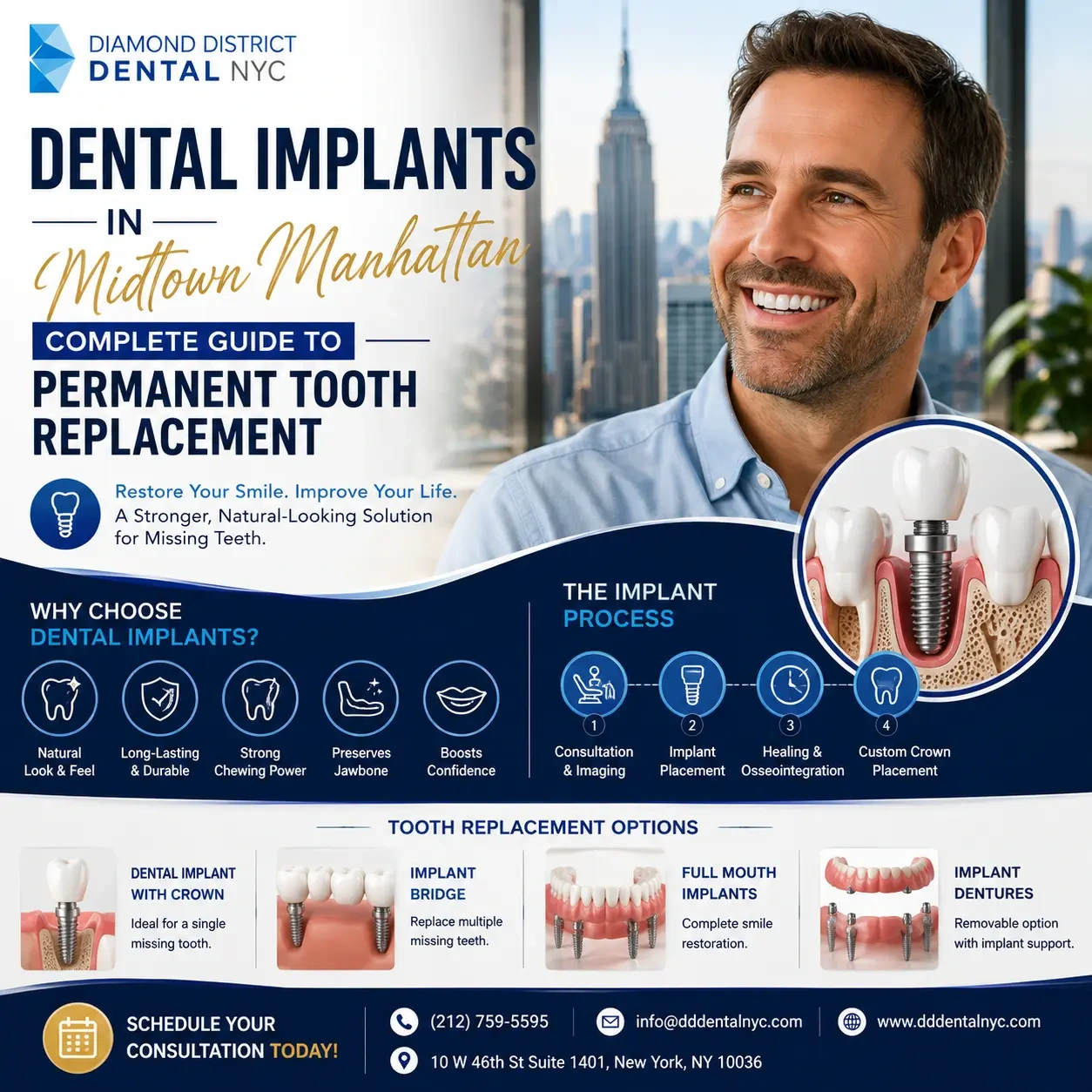
Dental implants are small posts, usually made of titanium or another biocompatible material, that are placed in the jawbone to replace the root of a missing tooth. After healing, the implant can support a crown, bridge, or denture depending on the number of teeth being replaced.
A complete implant restoration typically has three parts:
- The implant post placed in the jaw
- The abutment that connects the post to the restoration
- The crown, bridge, or denture that replaces the visible tooth
Unlike removable dentures, implants are fixed in place. Unlike a traditional bridge, they do not rely on neighboring teeth for support.
Why do patients often choose implants?
People often consider implants because they may offer:
- A natural looking result
- Better stability than removable options
- Support for chewing and speaking
- Help preserving the jawbone after tooth loss
- A long term tooth replacement solution when properly maintained
That said, implants are a surgical treatment, and they require enough healthy bone and gum tissue for predictable results. A professional evaluation is always the first step.
Why Are Dental Implants in Midtown Manhattan So Widely Considered?
Midtown Manhattan patients often want efficient treatment that fits a busy work and personal schedule. Dental implants can be appealing because they are designed for long term function and can often be planned with precision using modern imaging and restorative techniques.
A patient who has lost a single molar, for example, may want a replacement that feels stable during meals and does not require grinding down healthy adjacent teeth. Another patient may be replacing several teeth and wants a solution that looks natural in both work settings and social situations.
For many adults in New York City, the value of implants is not only cosmetic. It is practical. A stable tooth replacement can make daily life easier, especially when eating, smiling, or speaking in professional environments.
Who Is a Good Candidate for Dental Implants?
Not everyone is an immediate candidate, but many adults can qualify after evaluation.
Good candidates often have:
- One or more missing teeth
- Healthy gums or treatable gum concerns
- Enough bone to support an implant, or willingness to consider grafting
- Good overall oral hygiene habits
- Controlled medical conditions, if any are present
- A commitment to follow through with treatment and maintenance
Patients who may need additional planning include:
- Current smokers
- People with untreated gum disease
- Patients with significant bone loss
- Individuals with diabetes that is not well controlled
- Those taking medications that affect healing
- Patients who grind or clench their teeth
A dentist will review your medical history, examine your mouth, and likely recommend imaging before deciding whether implant treatment is appropriate. In some cases, the answer may be yes, but with preliminary care such as gum treatment or bone grafting.
The Dental Implant Process: What to Expect
Many patients are surprised that implant treatment is a process, not a single appointment. The exact timeline depends on your oral health and whether any preparatory work is needed.
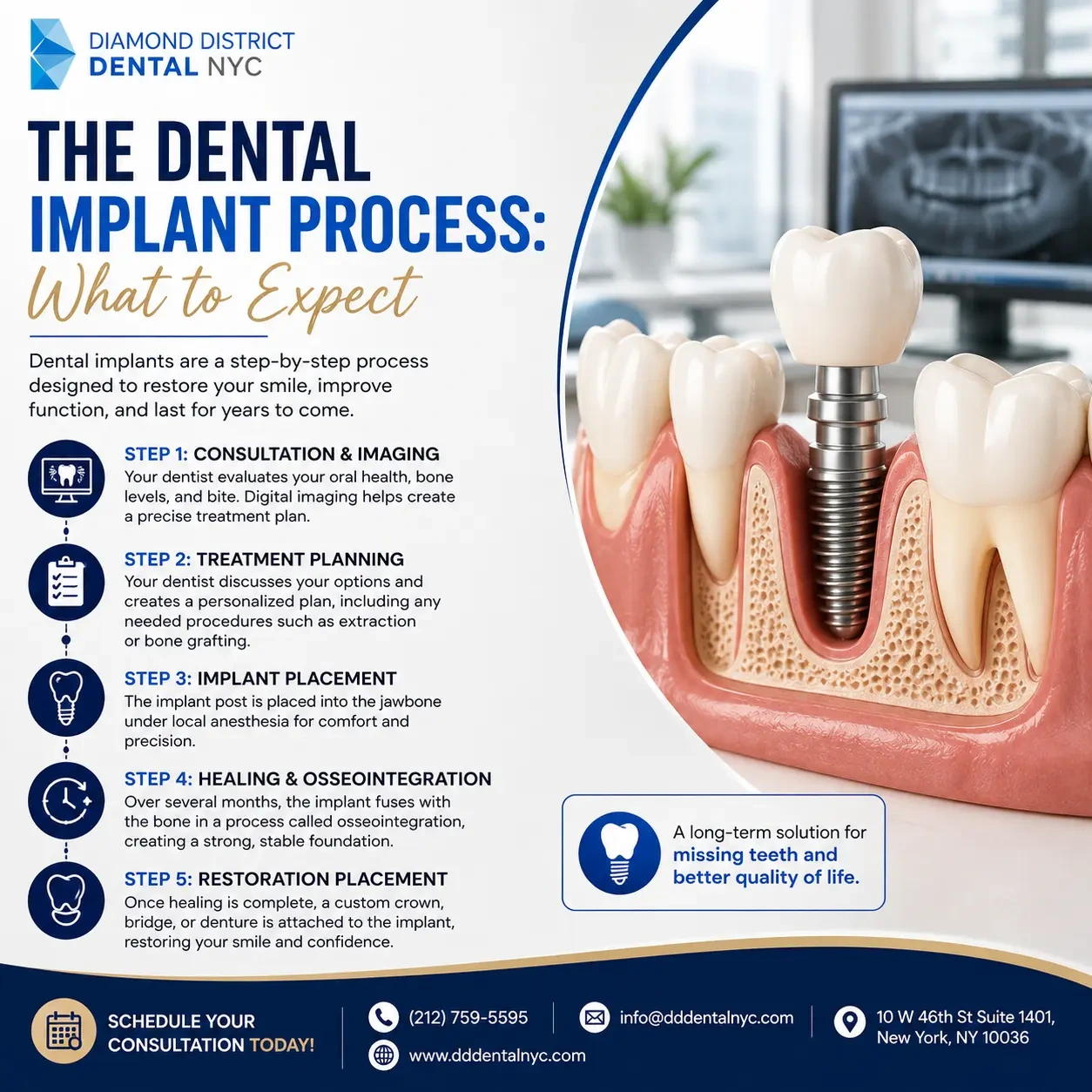
Step 1: Consultation and imaging
Your dentist evaluates the missing tooth area, gum health, bone levels, bite alignment, and any remaining teeth. Digital imaging may be used to assess whether the jaw can support an implant.
Step 2: Treatment planning
The dentist discusses your options, whether you need one implant or multiple implants, and whether any procedures such as extraction or grafting are needed first.
Step 3: Implant placement
The implant post is placed into the jaw under local anesthesia, and sometimes sedation depending on the case and office protocols.
Step 4: Healing and osseointegration
During healing, the bone fuses with the implant in a process called osseointegration. This is what helps create a stable foundation.
Step 5: Restoration placement
Once healing is complete, the final crown, bridge, or denture is attached to the implant.
Typical timeline for implant treatment
Phase | What Happens | Typical Timeframe |
Consultation | Exam, imaging, treatment planning | 1 visit |
Implant placement | Surgical placement of the implant post | 1 visit |
Healing | Bone integrates with implant | Several weeks to several months |
Final restoration | Crown, bridge, or denture is placed | 1 to 2 visits |
The timeline can be shorter in some cases and longer in others. Immediate loading may be possible for select patients, but it is not right for everyone.
Benefits and Limitations of Dental Implants
It is important to look at both sides of the treatment decision.
Benefits
- Fixed, stable tooth replacement
- Helps maintain facial structure by supporting the jawbone
- Does not require altering nearby teeth in the same way as a bridge
- Easier to care for than removable prosthetics for some patients
- Can last many years with proper hygiene and dental follow up
Limitations
- Requires oral surgery
- Healing takes time
- May need bone grafting or other preparatory treatment
- Higher initial cost than some alternatives
- Results depend on oral health, healing, and maintenance
No dental treatment is perfect for every person. The right option depends on the location of the missing tooth, how many teeth are involved, your health history, and your long term / goals.
Dental Implants vs Bridges vs Dentures
If you are comparing tooth replacement options, this overview may help.
Option | Best For | Pros | Limitations |
One or more missing teeth with adequate bone support | Stable, natural looking, helps preserve bone | Surgical, longer treatment time, higher upfront cost | |
One missing tooth or a short span of missing teeth | Faster treatment, fixed restoration | May require shaping adjacent healthy teeth | |
Multiple missing teeth or full arch replacement | Lower initial cost, non surgical in many cases | Less stable, may need adjustments, bone loss can continue |
For some patients, a bridge is the right choice. For others, dentures are more practical. Implants are often preferred when long term stability and bone preservation are top priorities, but only a dentist can determine whether they are appropriate.
What Recovery Is Usually Like
Most patients want to know how they will feel after surgery. Recovery varies, but many people describe it as manageable with proper aftercare.
Common short term effects may include:
- Mild swelling
- Tenderness at the surgical site
- Minor bleeding on the first day
- Temporary sensitivity while healing
A dentist usually provides post operative instructions that may include:
- Eating soft foods for a period of time
- Avoiding smoking
- Keeping the area clean as directed
- Taking prescribed or recommended medication
- Returning for follow up visits
If you notice severe pain, persistent swelling, fever, or a loose implant area, you should contact your dentist promptly. Those symptoms can signal a complication that needs attention.
Recovery expectations at a glance
Time Period | Common Experience | Care Focus |
First 24 to 48 hours | Swelling, soreness, limited chewing on that side | Rest, ice, soft foods |
First week | Healing begins, discomfort usually improves | Oral hygiene instructions, follow up if needed |
Several weeks to months | Bone integration continues | Protect the area, attend checkups |
After final restoration | Function improves with normal use | Long term maintenance |
How Long Do Dental Implants Last?
That question comes up often, and it is a fair one. Dental implants can last many years, and some last for decades, but longevity depends on several factors such as oral hygiene, smoking, bite forces, gum health, and regular dental care.
The crown or other restoration on top of the implant may wear out before the implant itself and may need replacement over time. This is normal with many dental restorations.
Patients who keep up with cleanings, home care, and routine exams generally give their implants the best chance of lasting.
How Much Do Dental Implants Cost?
Cost is one of the biggest considerations for patients researching dental implants in Midtown Manhattan. The total price can vary because it depends on:
- Number of implants needed
- Need for tooth extraction
- Bone grafting or sinus lift procedures
- Type of restoration placed on top
- Sedation or anesthesia needs
- Complexity of the bite or surrounding teeth
A single implant may cost more than a bridge or denture upfront, but the comparison is not just about the first bill. Long term maintenance, replacement needs, and overall function should also be considered.
A consultation helps clarify whether your case is straightforward or more involved.
How to Care for Dental Implants?
Daily care matters just as much after treatment as it does before.
Helpful habits include:
- Brushing twice a day with a soft bristled toothbrush
- Cleaning between teeth and around the implant as directed
- Keeping regular dental visits
- Avoiding tobacco use
- Wearing a nightguard if you grind your teeth and your dentist recommends one
Implants do not get cavities, but the surrounding gums and bone can still develop problems. Professional maintenance is essential.
Conclusion
For patients seeking a stable and long lasting tooth replacement, dental implants in Midtown Manhattan can be an excellent option, but they are not one size fits all. The best treatment depends on your gum health, bone levels, number of missing teeth, medical history, and personal goals.
A thoughtful evaluation helps determine whether an implant, bridge, or denture will serve you best. If you are exploring permanent tooth replacement in New York City, the next step is a professional consultation with a team that can explain your options clearly and recommend care based on your needs.
Frequently Asked Questions
Dental implant placement is performed using local anesthesia, so most patients feel pressure rather than pain during the procedure. Mild soreness after surgery is common and can usually be managed with recommended aftercare.
The treatment timeline depends on your oral health and whether procedures such as tooth extraction or bone grafting are needed. Simple cases may take a few months, while more complex treatment plans can take longer.
Yes, but smoking can slow healing and increase the risk of implant complications or failure. Your dentist will evaluate your oral health and discuss ways to improve the chances of long term implant success.
Yes. Dental implants are custom designed to match the shape, size, and color of your surrounding teeth, providing a natural looking and functional smile when properly placed and restored.
Not always. The best option depends on factors such as bone health, the condition of neighboring teeth, your oral health, and your long term treatment goals. A dental evaluation helps determine the most suitable solution.
Yes, many patients with bone loss may still qualify for dental implants. Your dentist may recommend bone grafting or other preparatory treatments to create a stable foundation before implant placement.
No. Age alone does not determine whether you are a good candidate for dental implants. Healthy gums, sufficient bone support, and overall health are generally more important than your age.
The best way to determine your eligibility is through a dental consultation that includes a clinical examination and diagnostic imaging. Your dentist will evaluate your oral health, bone density, and treatment goals before recommending the most appropriate option.
If you are considering dental implants in Midtown Manhattan,
schedule a consultation with Diamond District Dental NYC. Our team can evaluate your smile, review your treatment options, and help you understand whether implants are the right fit for your oral health and long term goals.