A routine dental visit may reveal more than cavities or gum inflammation. For some patients, it can uncover clues about a sleep disorder that affects breathing, energy, and long term oral health. That is one reason a sleep apnea dentist NYC may ask questions about snoring, dry mouth, morning headaches, and fatigue during an exam.
Sleep apnea is often associated with poor sleep, but its effects can show up in the mouth too. Teeth grinding, jaw soreness, dry tissues, and worn enamel may all be part of the picture. If a dental team notices these patterns early, patients can be guided toward appropriate evaluation and treatment before the condition begins to take a larger toll.
For adults in New York City who are balancing demanding schedules, travel, stress, and irregular sleep, the warning signs can be easy to miss. Understanding how dentists screen for sleep apnea can help patients recognize when oral health and sleep health may be connected.
What is sleep apnea, and why do dentists look for it?
Sleep apnea is a condition in which breathing repeatedly stops or becomes shallow during sleep. The most common type is obstructive sleep apnea, which happens when the airway becomes partially or fully blocked. This can lead to snoring, oxygen drops, interrupted sleep, and daytime fatigue.
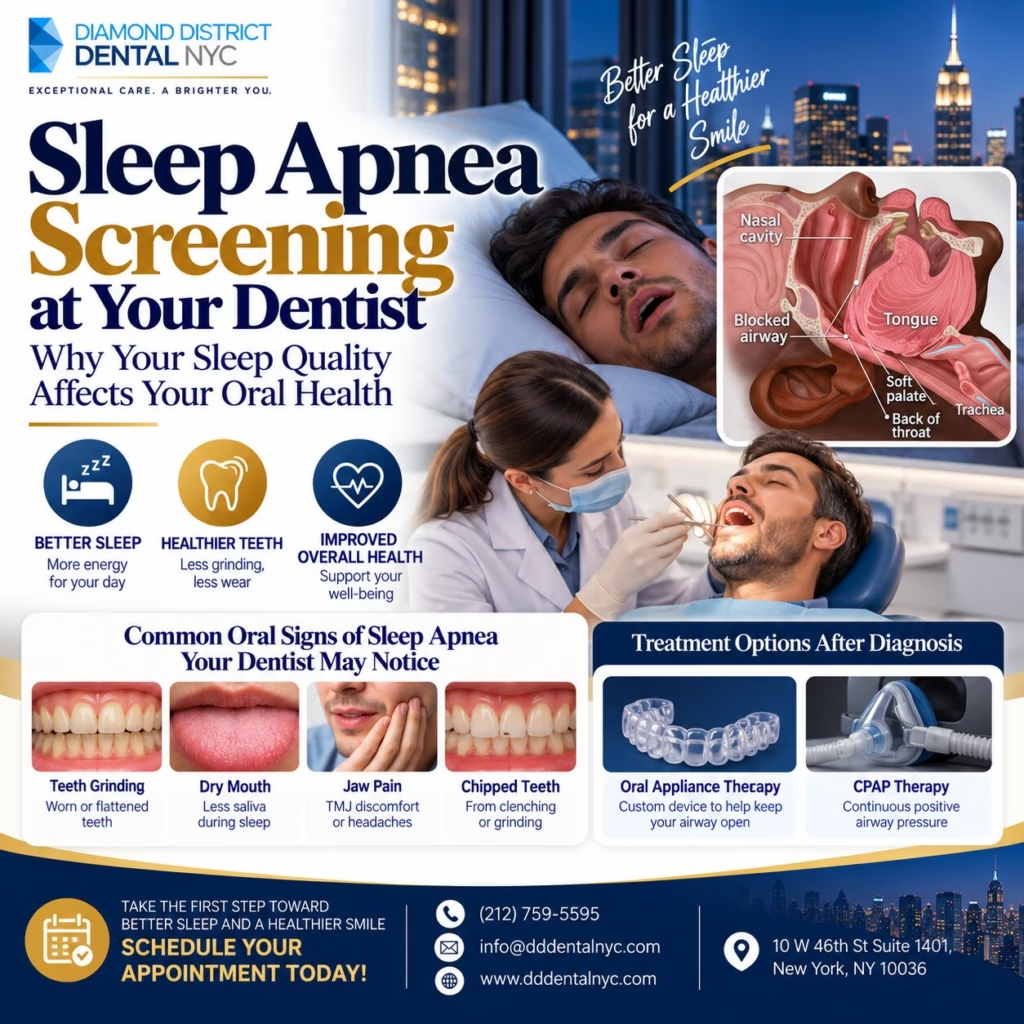
Dentists often play an important screening role because the mouth and jaw can show indirect signs of airway problems. During a dental exam, a clinician may notice:
- Worn tooth surfaces from clenching or grinding
- Dry mouth or signs of mouth breathing
- A scalloped tongue
- A narrow palate or crowded oral structures
- Jaw tenderness or TMJ symptoms
- Red flags in the patient history, such as loud snoring or waking unrefreshed
A dentist does not diagnose sleep apnea alone. Instead, screening helps identify patients who may need referral to a sleep physician for formal testing, such as a sleep study.
Why does sleep affect your oral health?
Poor sleep does not just leave you tired. It can also affect how your mouth functions and heals.
A patient who wakes up frequently at night may breathe through the mouth more often, especially if the airway is partially blocked. That can reduce saliva flow. Saliva is important because it helps neutralize acids, protect enamel, and limit dry mouth related irritation. Without enough saliva, patients may have a higher risk of cavities, gum discomfort, and bad breath.
Sleep apnea can also contribute to nighttime bruxism, or teeth grinding, in some patients. The relationship is complex, and grinding is not always caused by sleep apnea. Still, when both are present, the teeth and jaw can take a beating. Over time, this may lead to:
- Flattened or chipped teeth
- Tooth sensitivity
- Cracked restorations
- Jaw pain or headaches
- Increased wear on crowns, bridges, or natural enamel
For some patients, the first clue is not snoring. It is a dental issue that seems to keep coming back.
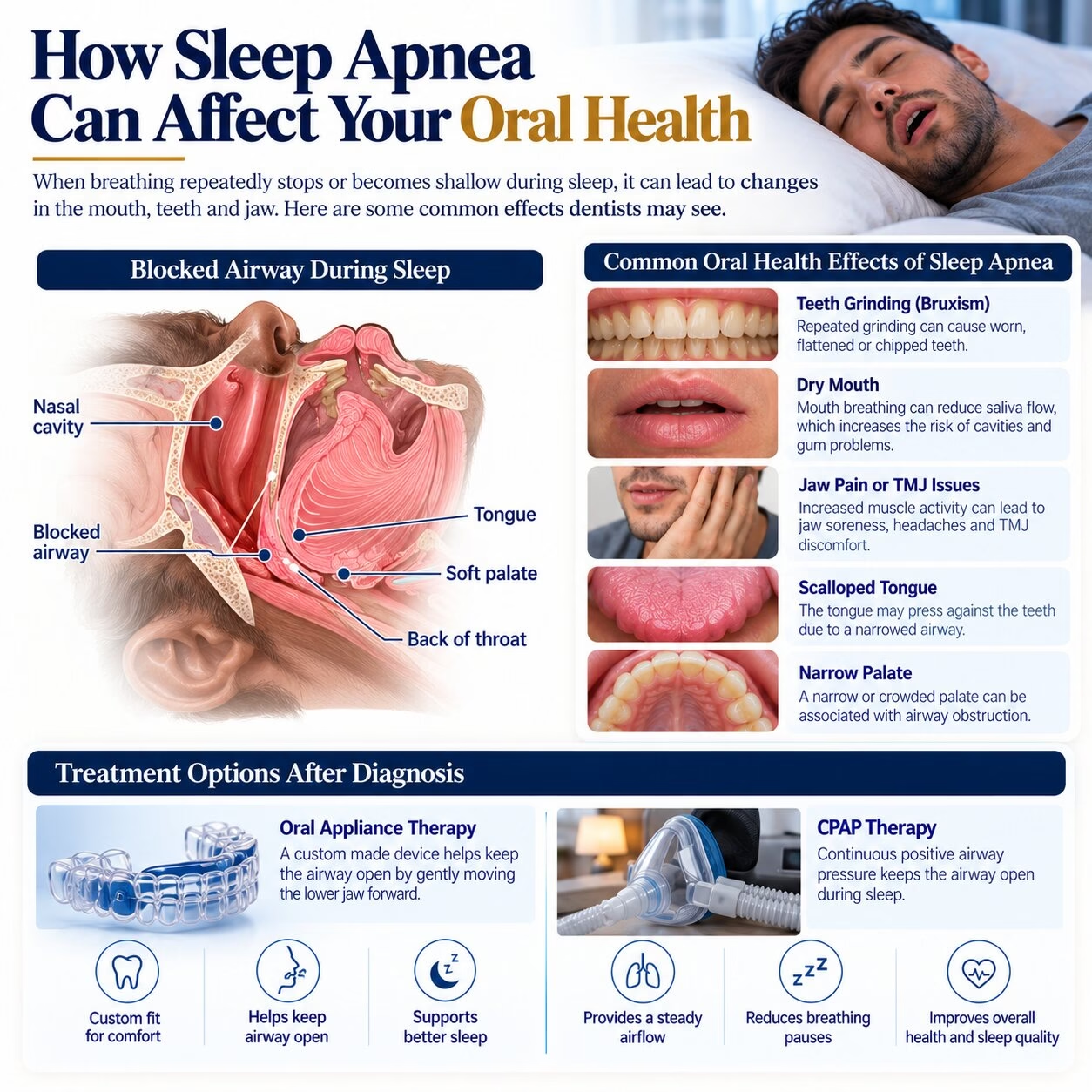
Common signs a dentist may notice during screening
A sleep apnea screening often begins with a conversation. The dentist may ask whether the patient snores, wakes up gasping, feels sleepy during the day, or has difficulty concentrating. Then the clinical exam provides additional clues.
Signs that may raise concern
- Dry mouth on waking
- Enlarged tongue or tongue scalloping
- Red or irritated throat tissues
- Evidence of bruxism
- A small or crowded jaw structure
- Bruxism appliances showing heavy wear
- Complaints of poor sleep quality
These signs do not prove someone has sleep apnea, but they can support a referral for medical evaluation.
Patient scenario
A professional in Midtown Manhattan comes in for a crown replacement and mentions that her teeth keep chipping. She also says she wakes with headaches and her partner says she snores loudly. In a case like this, the dentist may consider whether sleep disordered breathing is part of the reason the teeth are under so much stress.
How a sleep apnea screening at the dentist works
A dental screening is usually straightforward and non-invasive. It can be done during a regular exam or hygiene visit.
Step 1: Medical and sleep history
The dentist may ask about:
- Snoring
- Daytime sleepiness
- Morning headaches
- Dry mouth
- Nighttime awakenings
- Clenching or grinding
- Blood pressure history
- Weight changes or other health factors
Step 2: Oral exam
The dentist checks the teeth, gums, tongue, airway related anatomy, jaw joints, and signs of wear.
Step 3: Risk assessment
Some offices use questionnaires or screening tools to help estimate risk. These are not diagnostic, but they help determine whether referral is appropriate.
Step 4: Referral if needed
If sleep apnea is suspected, the patient is usually referred to a physician or sleep specialist for diagnosis. Depending on the case, a home sleep apnea test or an in lab sleep study may be recommended.
Sleep apnea dentist NYC: when a dental team may help most
A sleep apnea dentist NYC can be especially helpful for patients who already notice oral symptoms but have not connected them to sleep. This includes adults who have:
- Chronic snoring
- Morning headaches
- Dry mouth
- Worn teeth
- TMJ discomfort
- A history of clenching or grinding
- Difficulty tolerating a CPAP machine
Dentists are often part of a broader care team. They help identify oral signs, protect teeth from damage, and, in some cases, provide oral appliance therapy after diagnosis.
Treatment options after diagnosis
Treatment depends on the type and severity of sleep apnea, as well as the patient’s medical history and preferences.
Common treatment approaches
- CPAP therapy – Continuous Positive Airway Pressure, which uses air pressure to keep the airway open
- Custom AirVata oral appliance therapy for eligible sleep apnea patients
- Custom Gelb Appliance therapy for selected obstructive sleep apnea cases
- Weight management or lifestyle changes when appropriate
- Positional strategies in selected cases
- Oral appliance therapy for certain patients with mild to moderate obstructive sleep apnea or for those who cannot tolerate CPAP
Oral appliances are custom fitted devices that hold the lower jaw in a slightly forward position to help keep the airway open. They are not right for every patient, and they should be recommended and monitored by qualified professionals.
Treatment options at a glance
| Treatment option | Who it may help | Benefits | Limitations |
|---|---|---|---|
| CPAP | Many patients with moderate to severe obstructive sleep apnea | Highly effective when used consistently | Some patients find it uncomfortable or hard to maintain |
| AirVata Oral Appliance | Patients with mild to moderate obstructive sleep apnea or CPAP intolerance | Custom fitted, comfortable, portable, may reduce snoring and teeth grinding while improving airflow | Not suitable for every patient and requires professional evaluation and follow up |
| Gelb Appliance | Selected patients with obstructive sleep apnea who qualify for oral appliance therapy | Custom made, supports airway opening, may improve sleep quality and reduce jaw strain | Requires proper fitting and ongoing monitoring, may not be appropriate for severe sleep apnea |
| Oral appliance therapy | Some patients with mild to moderate obstructive sleep apnea or CPAP intolerance | Portable, quieter, often easier to travel with | Not ideal for every case, may affect bite over time |
| Lifestyle changes | Patients with contributing factors such as weight gain or sleep position issues | Can support overall health | Usually not enough as a stand alone treatment for diagnosed sleep apnea |
| Surgery | Selected patients with specific anatomical issues | May help in carefully chosen cases | Requires specialist evaluation and is not first line for most patients |
Can a dentist treat sleep apnea?
A dentist can help manage oral side effects and may provide a custom oral appliance, but diagnosis and medical oversight are essential. Sleep apnea is a medical condition, not just a dental issue.
That distinction matters. A thorough evaluation helps ensure the patient gets the right treatment and avoids masking a more serious breathing disorder. Some patients may benefit from a combined approach involving a sleep physician, dentist, and sometimes an ENT specialist.
How does oral appliance therapy work?
Oral appliance therapy can be a useful option for the right patient. It typically involves a custom made device worn during sleep. The appliance moves the lower jaw slightly forward to help open the airway and reduce collapse.
Good candidates may include
- Patients with mild to moderate obstructive sleep apnea
- Patients who snore and have been evaluated by a physician
- Patients who cannot tolerate CPAP despite trying it
- Patients with healthy enough teeth and gums to support the device
Possible limitations
- It may take time to adjust to wearing the appliance
- It can cause temporary jaw soreness or tooth discomfort
- Follow up is necessary to check fit and bite changes
- It may not be appropriate for severe sleep apnea without medical guidance
A patient should never assume that a store bought guard or anti snoring device is enough. Many over the counter products are not customized and may not address the underlying problem.
Oral signs and what they may suggest
Oral finding | Possible concern | Why it matters |
|---|---|---|
Dry mouth | Mouth breathing, reduced saliva, possible sleep disorder | Raises cavity and irritation risk |
Worn front teeth | Clenching or grinding | May indicate nighttime jaw activity |
Crowding or pressure from the teeth | Can be associated with airway issues | |
Jaw soreness | Bruxism or TMJ strain | May reflect ongoing muscle tension during sleep |
Frequent cracked fillings | Excessive bite force | Restorations may be under stress |
How sleep apnea can affect dental work
Poor sleep and airway issues can complicate dental treatment indirectly. If a patient clenches heavily at night, crowns, bridges, veneers, and natural teeth may be exposed to extra force. That does not mean dental restorations will fail, but they may need careful planning.
Patients with untreated sleep apnea may also report:
- Difficulty sitting comfortably during longer visits due to jaw tension
- Dry mouth that makes dental care feel less comfortable
- More frequent wear on restorations
- Greater need for protective appliances in some cases
For patients receiving cosmetic or restorative care, it can be wise to address sleep related habits as part of the treatment plan.
Practical steps patients in NYC can take
If you live in New York City and think your sleep and oral health might be connected, start with a conversation at your next dental visit. Bring up snoring, headaches, dry mouth, or daytime fatigue even if they seem unrelated.
A few practical steps can help:
- Keep track of sleep symptoms for a week or two
- Ask a partner whether loud snoring or pauses in breathing have been noticed
- Tell your dentist about jaw soreness or tooth wear
- Follow through with medical referral if recommended
- Keep up with regular cleanings and exams
Early screening can make a difference because both teeth and sleep tend to worsen quietly over time.
Frequently Asked Questions
A dentist cannot diagnose sleep apnea, but they can identify warning signs such as teeth grinding, dry mouth, jaw pain, and airway concerns. If needed, they may recommend a referral to a sleep specialist for further evaluation.
Common oral signs include dry mouth, worn or cracked teeth, tongue scalloping, jaw soreness, and evidence of nighttime teeth grinding. These findings may indicate the need for a sleep apnea evaluation.
No. Snoring does not always mean you have sleep apnea, but loud, frequent snoring combined with daytime fatigue, gasping during sleep, or morning headaches should be evaluated by a healthcare professional.
No. Oral appliances do not cure sleep apnea, but they can effectively manage mild to moderate obstructive sleep apnea for suitable patients. They should always be custom fitted and monitored by qualified professionals.
Either can be a good starting point. A dentist may identify oral signs during a routine exam, while a physician or sleep specialist performs the testing needed to diagnose sleep apnea and recommend appropriate treatment.
Yes. Sleep apnea may contribute to teeth grinding, worn enamel, cracked teeth, dry mouth, jaw discomfort, and an increased risk of oral health problems if left untreated.
A sleep apnea screening usually includes questions about your sleep habits, snoring, and symptoms, followed by a routine oral examination. If warning signs are found, your dentist may recommend a sleep study for diagnosis.
Yes. Children can also develop sleep apnea and may experience symptoms such as loud snoring, restless sleep, mouth breathing, or daytime behavioral changes. A medical evaluation is recommended if these signs are present.
Conclusion
A visit with a sleep apnea dentist NYC may uncover more than dental wear or dry mouth. It can reveal a pattern that points to disrupted breathing during sleep, a condition that deserves medical attention and coordinated care. Because sleep apnea can influence oral health, jaw comfort, and the durability of dental work, screening can be an important part of preventive dentistry.
If you have noticed snoring, morning headaches, dry mouth, or unexplained tooth wear, do not ignore the signs. A dental evaluation may help you take the next step toward better sleep and better oral health.
Experience faster, more accurate, and more comfortable dental care with modern digital technology.
If you are concerned that sleep and oral health may be connected,
schedule a visit with Diamond District Dental NYC. Our team can evaluate your symptoms, look for oral signs that may suggest sleep apnea, and help guide you toward the right next steps for care.