What are the best techniques for brushing teeth? is a question many people ask only after they start noticing bleeding gums, sensitivity, or stubborn plaque near the gumline. It is also one of the most common questions patients bring up during preventive dental visits, especially when they want a routine that does more than just make teeth feel clean.
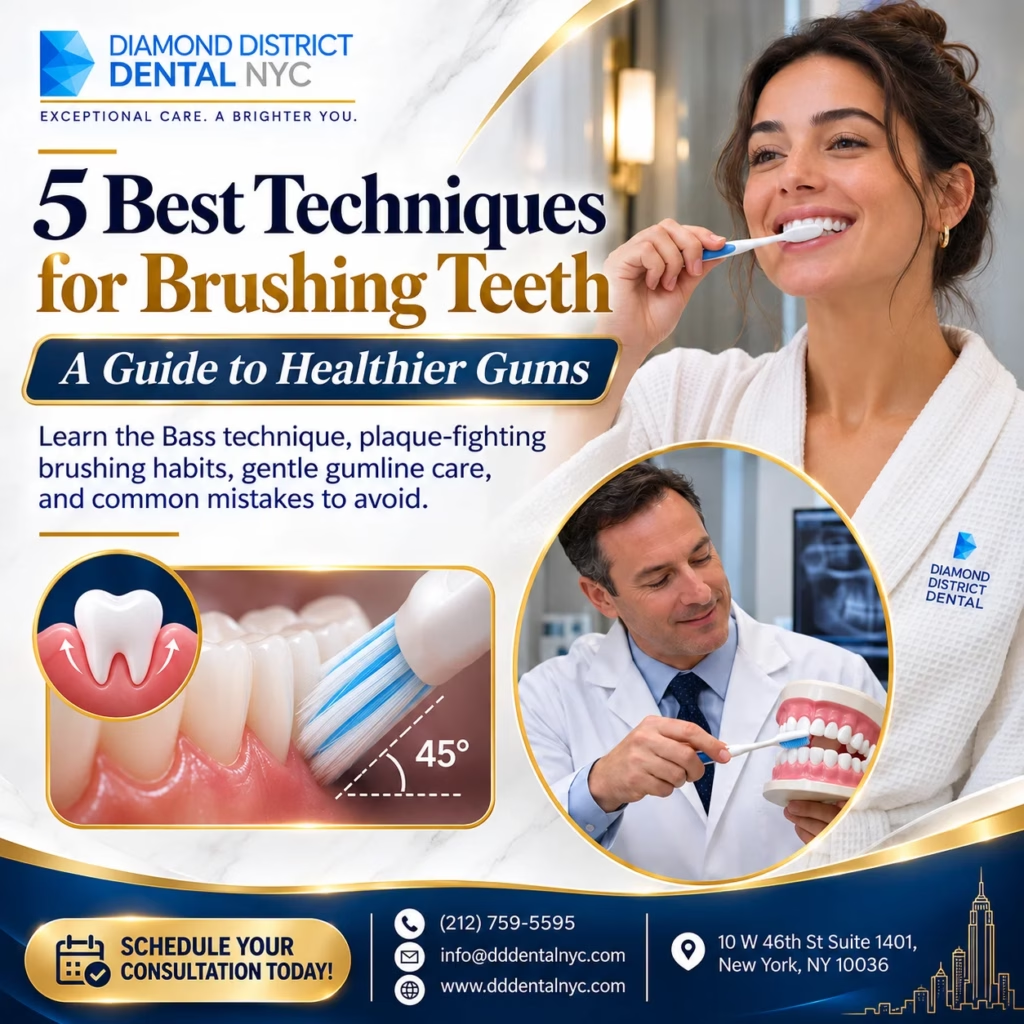
The truth is that brushing is not only about scrubbing the visible surfaces of your teeth. The technique you use matters, especially if your goal is to protect the gums, reduce plaque buildup, and lower the risk of gingivitis and periodontal disease. One method that often stands out in dental education is the Bass technique, a gentle approach designed to clean along the gumline where plaque tends to collect.
For patients in NYC balancing busy schedules, quick brushing habits are common. But a few small adjustments can make a meaningful difference in long term oral health. In this article, we will explain the Bass technique for brushing teeth, compare it with other methods, and help you understand how to brush in a way that supports both teeth and gums.
What Are The Best Techniques for Brushing Teeth?
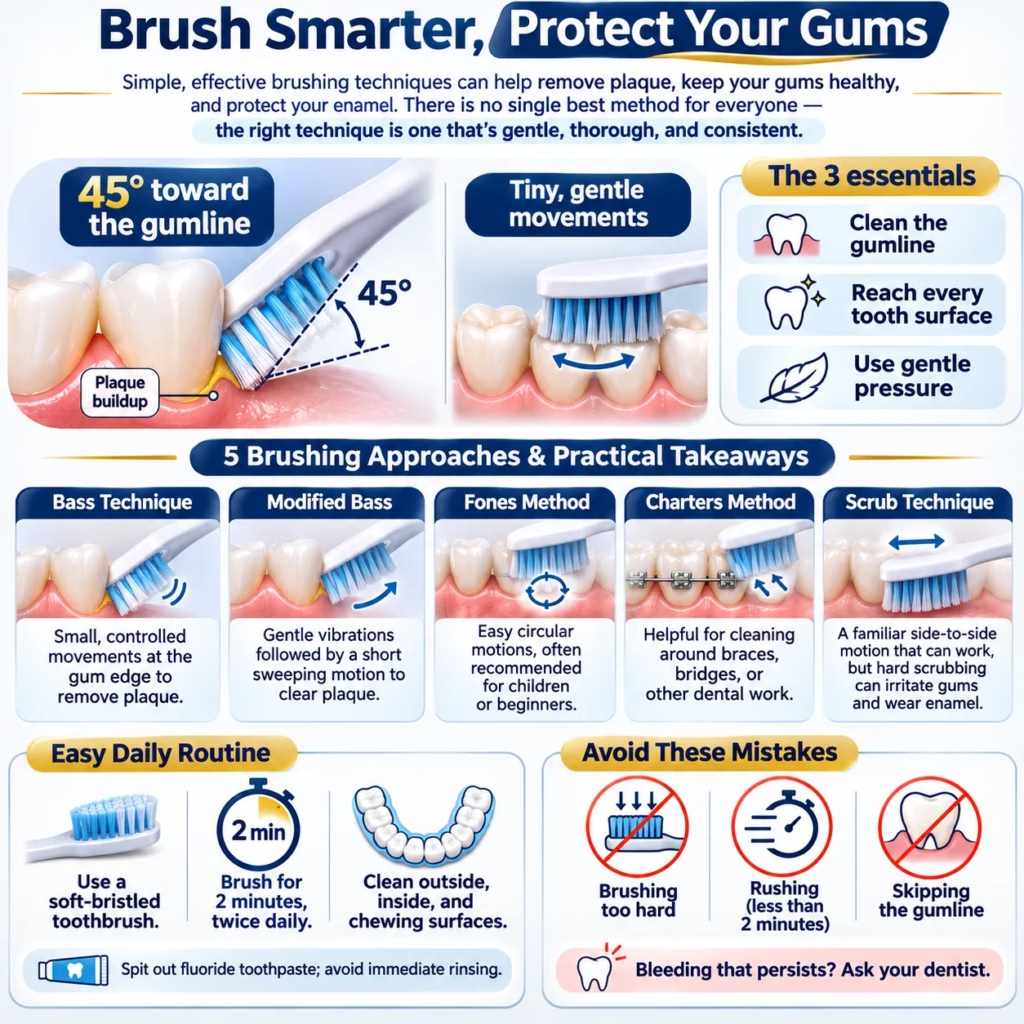
There is no single brushing method that is right for every patient in every situation, but for most adults, the best technique is one that removes plaque effectively without damaging the gums or enamel. That usually means using a soft bristled toothbrush, holding it at the right angle, and using small controlled motions rather than aggressive back and forth scrubbing.
Dentists often recommend focusing on three goals:
- Remove plaque along the gumline
- Clean all tooth surfaces evenly
- Avoid injury to the gums and enamel
If someone brushes too hard, they may make their teeth feel clean for the moment but still miss plaque near the gums. Over time, that can contribute to gum inflammation and recession. If brushing is too light or too rushed, plaque may remain behind. The ideal technique sits somewhere in the middle: thorough, gentle, and consistent.
Why does the gumline matter?
A large share of plaque accumulates where the tooth meets the gum. That narrow edge is easy to miss, especially with hurried brushing. This is one reason periodontal professionals often emphasize a technique that angles the bristles toward the gumline rather than flat against the tooth surface.
Bass Technique for Brushing Teeth Explained
The Bass technique sometimes called the sulcular brushing technique, is widely taught in dentistry because it is effective at cleaning along the gumline. It is especially useful for people with early gum disease, bleeding gums, or a history of plaque buildup around the lower front teeth and back molars.
Here is the basic idea:
- Place the toothbrush bristles at a 45 degree angle toward the gumline.
- Let the bristles rest partly on the tooth and partly just under the gum margin.
- Use small vibrating or gentle circular motions.
- Clean two to three teeth at a time before moving on.
- Continue around the outside and inside surfaces of all teeth.
Unlike forceful scrubbing, the Bass technique uses precision. The goal is to let the bristles reach just under the gumline where plaque collects, while staying gentle enough not to irritate the tissue.
Who may benefit most from the Bass technique?
This method can be especially helpful for:
- Adults with bleeding or inflamed gums
- Patients with early gingivitis
- People who tend to brush too hard
- Patients who wear orthodontic appliances
- People with limited manual dexterity who can still control small motions
- Patients prone to plaque buildup near the gumline
It is important to note that the Bass technique is not a substitute for professional dental care. If gum disease is already advanced, brushing alone will not reverse the problem. A dentist or periodontist should evaluate the gums and determine whether additional treatment is needed.
How the Bass Technique Compares With Other Brushing Methods?
Different brushing methods are taught for different reasons. Some are simpler for children. Others are used in specific clinical situations. For most adults, the Bass technique is often preferred because it targets the gumline more effectively than a basic scrubbing motion.
Brushing Method | Best For | Main Advantage | Limitation |
|---|---|---|---|
Adults, gum health, plaque control | Cleans along the gumline gently and effectively | Takes a little practice | |
Most adults, especially those with gum sensitivity | Similar benefits with slightly broader stroke guidance | Still needs proper angle and control | |
Young children or beginners | Easy to learn | Less precise near gumline | |
Some people naturally use it | Simple and familiar | Can miss plaque and may irritate gums if done too hard | |
Patients with braces or certain dental work | Helpful around orthodontic appliances and some restorations | Not ideal as a universal method |
For many patients, the best choice is not about memorizing a perfect textbook method. It is about using a technique consistently, gently, and correctly enough to control plaque and protect the gums.
What Are The Best Techniques for Brushing Teeth if You Have Sensitive Gums?
If your gums bleed when you brush, you may assume you need to brush more aggressively. In reality, sensitive or bleeding gums often need better technique, not harder brushing.
A soft bristled toothbrush and the Bass technique can be a good combination for patients with tenderness around the gumline. The small vibrating movement is usually less irritating than horizontal scrubbing. Many patients notice that once they reduce pressure and improve angle, bleeding starts to improve over time.
That said, persistent bleeding can also signal gingivitis or periodontal disease. If bleeding continues for more than one to two weeks despite improved home care, a professional exam is important. Dental cleanings may be needed to remove tartar that brushing cannot eliminate.
Common Brushing Mistakes That Can Undermine Gum Health
Even well intentioned patients often make small brushing mistakes that add up over time.
These are some of the most common ones dentists see:
- Brushing too hard
- Using a medium or hard bristled brush
- Holding the brush flat instead of at a 45 degree angle
- Rushing through brushing in less than two minutes
- Skipping the inner surfaces of teeth
- Ignoring the gumline
- Brushing immediately after acidic foods or drinks
- Replacing the toothbrush too infrequently
The pressure issue deserves special attention. More force does not mean more plaque removal. In fact, excessive pressure can wear enamel, irritate gums, and cause recession. A brush should clean the teeth, not scrape them.
Step by Step: How to Brush Teeth Correctly
Even well intentioned patients often make small brushing mistakes that add up over time.
These are some of the most common ones dentists see:
- Brushing too hard
- Using a medium or hard bristled brush
- Holding the brush flat instead of at a 45 degree angle
- Rushing through brushing in less than two minutes
- Skipping the inner surfaces of teeth
- Ignoring the gumline
- Brushing immediately after acidic foods or drinks
- Replacing the toothbrush too infrequently
The pressure issue deserves special attention. More force does not mean more plaque removal. In fact, excessive pressure can wear enamel, irritate gums, and cause recession. A brush should clean the teeth, not scrape them.
Electric or manual toothbrush?
Both can work well. An electric toothbrush may help some people maintain better consistency and reduce the temptation to brush too hard. A manual toothbrush can still be highly effective if used with the right technique. Patients with arthritis, limited dexterity, or braces often find electric brushes easier to use.
What are the Best Brushing Technique Cannot Do?
Brushing is essential, but it has limits. It does not clean well between teeth. It also cannot remove hardened tartar once it forms. That is why flossing or another interdental cleaning method matters, and why regular professional cleanings remain important.
If you are asking, what are the best techniques for brushing teeth, the answer should include the full routine, not brushing alone. Good oral hygiene usually includes:
- Brushing twice daily
- Cleaning between teeth once daily
- Routine dental checkups
- Professional cleanings as recommended
For patients with Dental implants, Dental bridges, or Invisalign treatment, your hygiene routine may need small adjustments. That is one reason personalized guidance matters.
When Brushing Technique Is Not Enough
Sometimes a technique problem is really a symptom of something bigger. If you notice recurring bleeding, bad breath, gum recession, or tenderness, it may be time for a dental evaluation rather than just a new toothbrush.
Potential concerns include:
- Gingivitis
- Periodontal disease
- Tartar buildup below the gumline
- Tooth decay near the gum margin
- Overbrushing injury
- Poorly fitting dental appliances
This is especially relevant for patients managing diabetes, dry mouth, smoking history, or a family history of gum disease. In these cases, brushing technique is important, but it is only one part of the picture.
Signs Your Brushing Routine May Need Adjustment
Sign You Notice | What It May Mean | What to Do |
|---|---|---|
Gums bleed often | Plaque buildup or inflammation | Improve technique and schedule an exam |
Teeth feel clean but gums stay irritated | Brushing may be too aggressive | Switch to a soft brush and lighter pressure |
Bad breath returns quickly | Bacteria may remain between teeth or along the gums | Add flossing and professional cleaning |
Gumline looks lower | Possible recession from overbrushing or gum disease | Seek dental evaluation |
Teeth feel sensitive | Enamel wear or exposed root surfaces | Ask a dentist about sensitivity and technique |
Practical Brushing Tips for NYC Patients With Busy Schedules
Many New York City patients are juggling work commutes, family routines, and long days that leave little room for dental care. That reality makes it even more important to build a routine that is realistic.
A few small strategies can help:
- Keep a toothbrush at work or in a travel kit
- Use a timer or electric brush with a built in timer
- Replace your brush head every three months or sooner if bristles fray
- Pair brushing with an established routine, like before bed
- Schedule preventive visits before small issues become bigger ones
Consistency matters more than perfection. A reliable routine is often more valuable than an occasional perfect brushing session.
Conclusion
If you have ever wondered about the best technique for brushing your teeth, the answer is less about brushing harder and more about brushing smarter. For many adults, the Bass technique for brushing teeth offers a strong balance of plaque removal and gum protection, especially when used with a soft bristled toothbrush and light pressure.
Good brushing habits support healthier gums, fresher breath, and a lower risk of cavities. But technique alone cannot replace professional cleanings or treat deeper gum problems. If you have bleeding gums, sensitivity, or concerns about plaque buildup, a dental evaluation can help you understand what your mouth needs.
Frequently Asked Questions
For most adults, the best techniques for brushing teeth is one that effectively removes plaque while protecting the gums and tooth enamel. Dentists commonly recommend the Bass technique because it targets the gumline with gentle, controlled movements, helping reduce plaque buildup and lower the risk of gingivitis and gum disease. Using a soft bristled toothbrush and brushing twice a day for two minutes can provide the best long term results.
The Bass technique is often considered more effective than a basic scrubbing motion because it cleans along the gumline where plaque and bacteria commonly collect. It is especially beneficial for patients with gingivitis, bleeding gums, or a history of plaque buildup. While regular brushing is important, using the correct technique can improve gum health and help prevent periodontal disease over time.
You should brush your teeth using gentle pressure rather than scrubbing aggressively. Applying too much force does not remove more plaque and may damage your gums, wear away tooth enamel, or cause gum recession. A good indicator is your toothbrush bristles—if they become frayed or flattened quickly, you are likely brushing too hard and should use a lighter touch.
Yes. Brushing too hard can irritate the gums, contribute to gum recession, increase tooth sensitivity, and gradually wear away protective enamel. A soft bristled toothbrush combined with gentle circular or vibrating motions is usually the safest and most effective way to clean your teeth without causing unnecessary damage.
Dentists generally recommend brushing your teeth for at least two minutes, twice a day. Spend equal time cleaning the outer, inner, and chewing surfaces of every tooth, and do not forget to gently brush your tongue to help reduce bacteria that can contribute to bad breath. Consistent brushing is more important than brushing more frequently for shorter periods.
No. You do not need a special toothbrush to use the Bass technique, but a soft bristled toothbrush is strongly recommended because it cleans effectively while being gentle on your gums. Both manual and electric toothbrushes can work well when used with the correct brushing angle and proper technique. Patients with braces, arthritis, or limited hand mobility may find an electric toothbrush easier to use.
Bleeding gums are commonly caused by plaque buildup that leads to gum inflammation, also known as gingivitis. They can also result from brushing too aggressively or using the wrong brushing technique. If your gums continue to bleed for more than one to two weeks despite improving your oral hygiene routine, you should schedule a dental examination to rule out periodontal disease or other underlying oral health conditions.
You can floss either before or after brushing, as both methods are effective when done consistently. The most important goal is to clean between your teeth once every day to remove plaque and food particles that a toothbrush cannot reach. Combining daily flossing with proper brushing and regular dental checkups is one of the best ways to maintain healthy teeth and gums.
Experience faster, more accurate, and more comfortable dental care with modern digital technology.
If you would like personalized guidance on brushing technique, gum health, or preventive care, schedule a consultation with Diamond District Dental NYC.
Our team can evaluate your oral health, demonstrate proper brushing technique, and help you build a routine that fits your needs in New York City.